






Reintroducing ancient maize genes into corn crops can benefit soil health and save costs while satisfying the need for higher yields.
Modern agriculture has evolved to increase yield in order to produce food for an ever-growing population, while often ignoring sustainability and the environmental impact of food production. Selective breeding and genetic engineering have delivered plants with higher yields in order to use land more efficiently. Now, we realize that yield is not the only factor we should consider for optimal land use.
New research from the University of Illinois Urbana-Champaign shows that reintroducing ancient genes from the precursor to maize, a spindly, wild plant called teosinte, restores the soil microbiome and reduces soil nitrogen loss. Their latest publication in Science Advances reports that inserting ancient genes that control uptake of nitrogen without reducing yield results in up to a 58 percent reduction in nitrification in field and greenhouse trials. Microbial-based solutions derived from ancient plants have the potential to influence nitrogen cycling across modern agriculture, increasing productivity and the sustainability of our food production systems.
Maize
Zea mays, corn, or maize, is one of the most important crops for human consumption worldwide. In the United States, maize is cultivated on 95.3 million acres with an estimated 3.8 trillion plants, most of which is in the Mississippi River watershed. Modern maize genotypes are selected for yield without regard for nitrogen needs, or environmental impact. US growers supply synthetic fertilizer without regard for cost or impact. The maize genotypes used today are derived from the teosinte plant, which originated in Mesoamerica more than 6,000 years ago. They have been engineered, through selection and genetic engineering, to produce increased yield, without considering cost or environmental impact.
RELATED: Do We Really Need Fertilizers To Grow Crops?
Teosinte
Teosinte, the ancient precursor to maize, contains genes that modern maize does not. When genes specific to nitrogen cycling from teosinte are activated, plant roots release chemicals that inhibit the activity of nitrifiers and denitrifiers in the rhizosphere, or soil where the roots grow. This keeps nitrogen in the form of ammonium, which stays in the soil. It is odd to think that the plant has genes that change the soil, but that is exactly what is happening in the ancient teosinte and not in modern maize.
RELATED: Gene modification in plants to increase photosynthesis, and thus yield.
Nitrification
Nitrification is the oxidation of ammonium to nitrite and then to nitrate. Microorganisms, or bacteria and fungi, called nitrofiers, in the soil have enzymes that catalyze this process. Plant genes also influence this process.
When commercial fertilizer is applied to the corn field, the fertilizer is usually ammonium. Bacteria catalyze the process of breaking down ammonium into nitrite, and next into nitrate. Ammonium binds to soil particles, and therefore does not wash out of the soil with water. Nitrate is soluble. When the bacteria make nitrate in large quantities, due to large inputs of fertilizer, the nitrate leaches out into water. If this water runs off into surface water or into ground water used for drinking, it could be harmful to humans and animals.
Teosinte contains genes that make proteins that inhibit this process, so the ammonium stays ammonium and stays in the soil. The soil stays fertile and the water that drains from the field does not contain nitrate.
Inhibiting nitrification, and suppressing the bacterial enzymes that catalyze the process, increases nitrogen uptake by the plants by up to 58 percent and this increases yield, even when less fertilizer is used.
Denitrification
Teosinte also has genes that produce proteins, or enzymes, that inhibit denitrification. Denitrification occurs when facultative anaerobic bacteria reduce nitrate or nitrite to gaseous molecular nitrogen. This happens when there is a lot of nitrate and nitrite in the soil. Nitrate is nitrogen with three oxygen atoms. Nitrite is nitrogen with two oxygen atoms. Nitrogen gas is two nitrogen atoms. In the process of denitrification, nitrate and nitrite are reduced in the soil, to nitrous oxide (two nitrogen atoms and one oxygen atom) and nitric oxide (one nitrogen and one oxygen). Nitrous oxide and nitric oxide are greenhouse gases, so when there is a lot of nitrate, nitrite, and nitric and nitrous oxide, this results in gases that enter the atmosphere and are not good for the planet.
It’s not just maize; learn about nitrogen-friendly rice: Robust Rice Varieties Cut Costs and Pollution
Putting these findings in context
This research indicates that wild, ancient cultivars of modern engineered plants contain genes that are beneficial to our modern agricultural systems. By inserting genes that decrease the processes that result in water and air pollution and do not decrease yield, we can produce crops that feed our world population without the significant destruction of our soil ecosystems.
Plants have always influenced the soil they grow in. While trying to increase yield, we missed the importance of managing our soil. Reintroduction of a gene that results in a decrease of nitrification by 58 percent, in a crop system that covers 95.3 million acres in the United States alone, is going to significantly reduce the effects of nitrification on large areas of land.
While it is reasonable to try to increase yield, it is imperative to consider the effects to the soil microbiome. If the teosinte genes do manage the soil nitrogen efficiently, and we reinsert those genes in our high-yielding maize crops, this will eliminate the need for synthetic inhibitors in commercial fertilizer and reduce the amount of commercial fertilizer necessary for successful yields.
Agriculture has probably the most important impact on the global nitrogen cycle, and with projections of increased population growth, it will become more important in water and air pollution. About 40 percent of the nitrogen that is currently applied as fertilizer is lost to water runoff and to the air as gaseous nitrogen. That is a significant amount. Fertilizer is expensive and energy intensive to produce. If using ancient genes can reduce the amount of fertilizer that must be produced and applied, and reduce the amount of nitrate runoff and nitrogen gas, the result is a large increase in efficiency and ecological sustainability. This is successful for food, for humans, and for the planet.
This study was published in the peer-reviewed journal Science Advances.
References
Favela, A., Kent, A. D., Sible, C. N., … & Bohn, M. O. (2026). Lost and found: Rediscovering microbiome-associated phenotypes that reshape agricultural sustainability. Science Advances 12(1), eaed3360. https://doi.org/10.1126/sciadv.aed3360
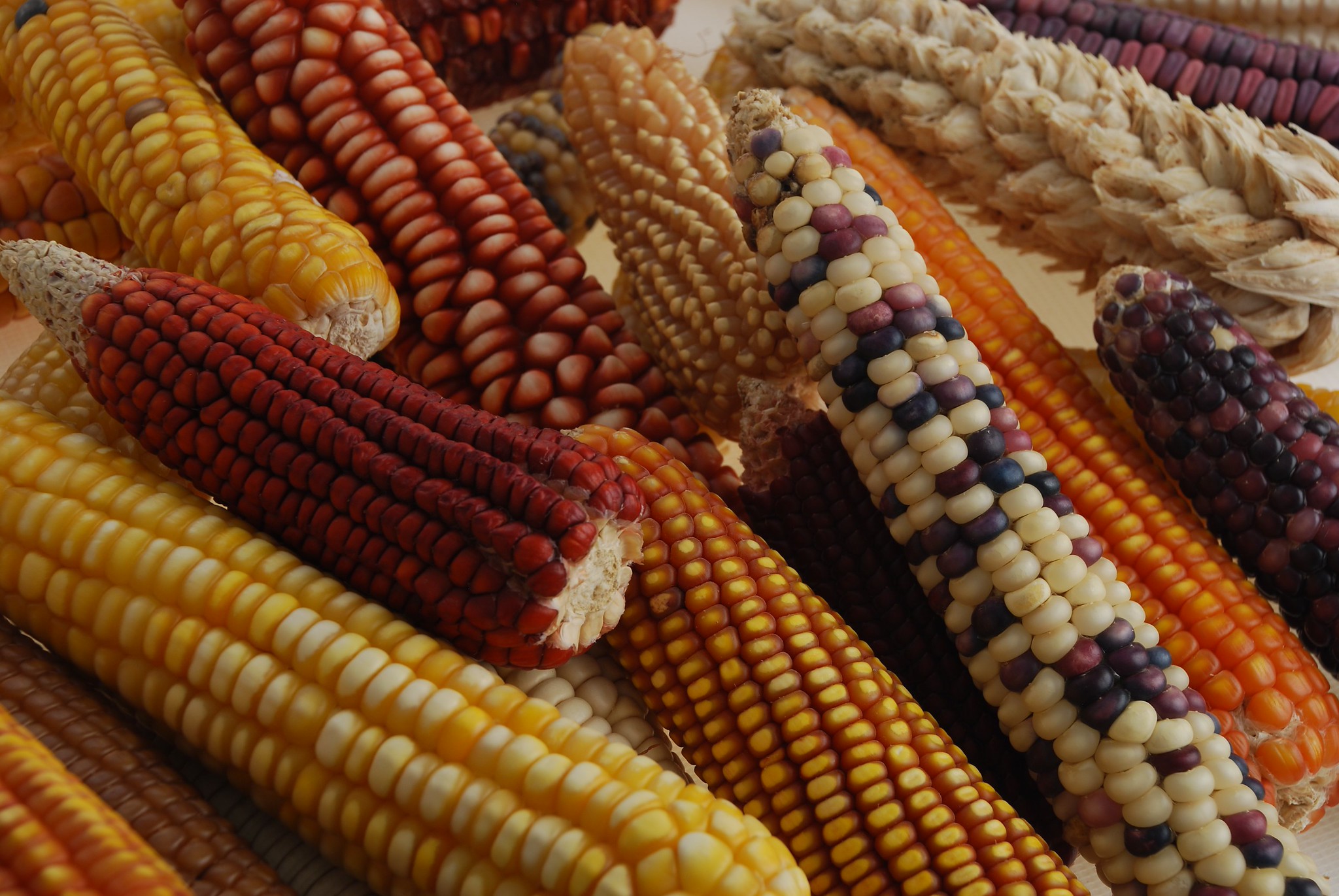
Featured image: maize ears collection (from CIMMYT’s germplasm bank containing about 28,000 unique samples of cultivated maize and its wild relatives, teosinte and Tripsacum). Photo credit: Xochiquetzal Fonseca/CIMMYT, licensed by CC BY-NC-SA 2.0.

About the Author
Helen Petre is a retired biologist. She is always learning, and working to ensure that future generations share her enthusiasm for science.