






Plastic degrades in the sun in lab experiments but not in real life, so what makes fresh water and salt water different?
We all know that sunlight breaks down plastics. Leave out those chairs, balls, and pool noodles and they crumble. So, why do we have this problem with plastic floating around in the ocean, in lakes, and everywhere? Why doesn’t all this stuff break down?
Engineers at Northwestern University suggested a reason. When we do experiments in controlled conditions, we use filtered water, and artificial light. In nature, water has organic materials, salt, and minerals, and sunlight has all wavelengths. Ocean water is not like water that is bottled, and sunlight is not at all like indoor light. And what about microbes? Maybe microbes affect the breakdown process.
The plastic problem
Polystyrene is a common plastic used in packaging. It is a synthetic polymer of styrene molecules, which are hydrocarbons. It can be solid, or foamed, like in Styrofoam. We use it as packing peanuts, cups, lids, containers, disposable cutlery, trays, and bottles. It is one of the most widely used products, and thus much of it is hanging around in oceans, lakes, and roadsides. It is famous as a large component of the Pacific Ocean plastic garbage patch. Polystyrene is chemically inert and not biodegradable. How do we get it to break down?
Polystyrene often becomes pollution. Animals do not realize that polystyrene is not food, which is not good. Polystyrene is very light, so it blows in the wind and floats on water. It is flammable, and burns incompletely, with a sooty smoke. It is not recyclable.
Light breaks down plastic, or does it?
Ultraviolet light causes plastics to break down through photodegradation. Plastics break down with light, in filtered water, in labs. The Aristilde lab group at Northwestern University investigated why plastic breaks down well in labs, but it does not break down outside, in lakes, the ocean, and land. They came up with an idea that perhaps the conditions in the lab are not simulating outdoor environmental conditions. They were right.
Recreating nature in the lab
Dr. Aristilde and her lab members tested plastic degradation in their lab at the McCormick School of Engineering at Northwestern University. They added salt to water to simulate the ocean. Then they added other dissolved ions usually present in ocean water including bromide, chloride, bicarbonate, and sulfate.
To make natural fresh water, they used dissolved ions usually found in lakes and rivers. They also added organic matter, including decaying plants and microbes.
As a control, they used filtered water.
They added polystyrene to each mixture and exposed them to full spectrum sunlight for three months.
Results
The researchers found that plastic broke down quickly in filtered water, and less quickly in fresh water. Adding organic products to the fresh water slowed the degradation process even more, and the salt water slowed degradation even more effectively. The more natural the water became, the less the plastic broke down.
It seems that the sun starts the breakdown process, but breakdown is inhibited by ions and organic matter that naturally occur in water.
“We think that, in pure water, sunlight goes through the water and directly to the plastic,” Dr. Aristilde said. “But when you have water with dissolved ions and organic matter floating around, the sunlight reacts with those components. So, those components compete with the plastics for the reactions driven by sunlight.”
Once the breakdown process is started, microbes in water use the degrading polystyrene molecules for food, further degrading plastic. So Aristilde’s team next introduced a bacterium known to degrade plastics into each water sample. Since the fresh water and salt water samples were less degraded by the sun, the microbes had less to work with. This compounded the slower degradation process for the closer-to-real conditions.
RELATED: Plastic Pollution and the Recyclable Ruse
Research takeaways
The researchers identified a common issue in lab experiments. Lab conditions do not simulate nature. Using filtered water and indoor lights is not at all like pond water and sun. They also found that natural conditions slow degradation.
Solving the problems of plastic pollution is not just about plastics. It is also about the natural world where plastic is. This information may help in designing biodegradable plastics for real-world conditions rather than ideal lab settings. “For example,” Dr. Aristilde notes, “if we can make plastic more susceptible to sunlight, it might make it easier for microbes to take care of the rest.”
This study was published in the peer-reviewed journal Materials Degradation.
References
Beni, N. N., Flynn, C. G., & Aristilde, L. (2026). Polystyrene photooxidation in natural waters as a precursor to microbial degradation. Materials Degradation, 10, 79. https://doi.org/10.1038/s41529-026-00788-7
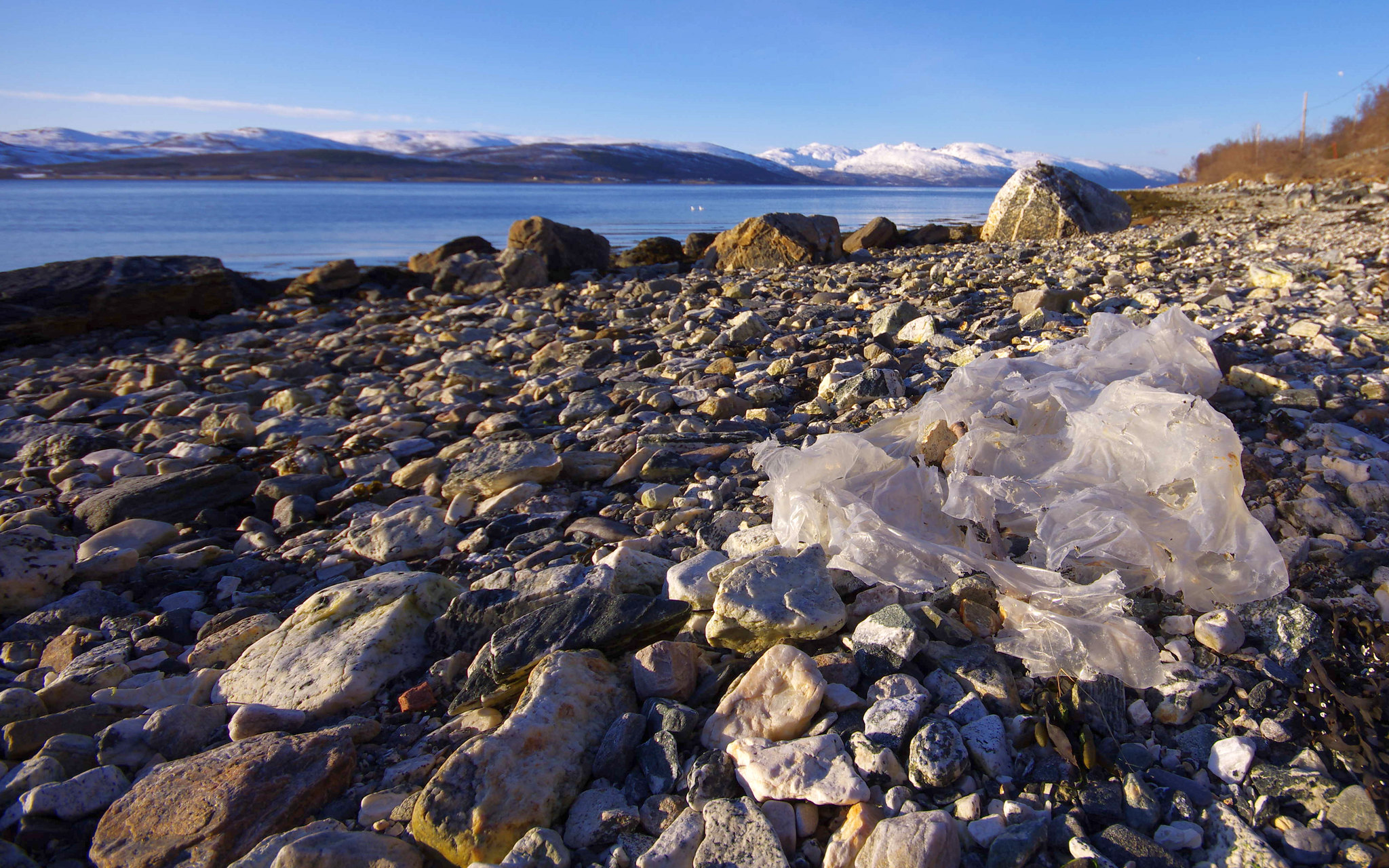
Featured image: “Marine litter. Plastic wrapping, already weakened by sunlight.” by Bo Eide, licensed under CC BY-ND 2.0.
About the Author
Helen Petre is a retired biologist concerned about environmental pollution by synthetic polymers.