






By Neha Jain
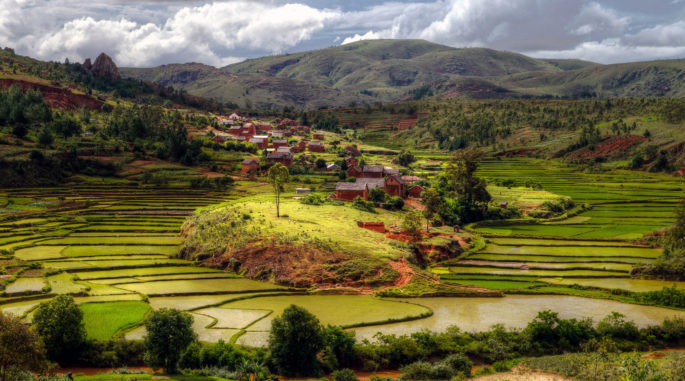
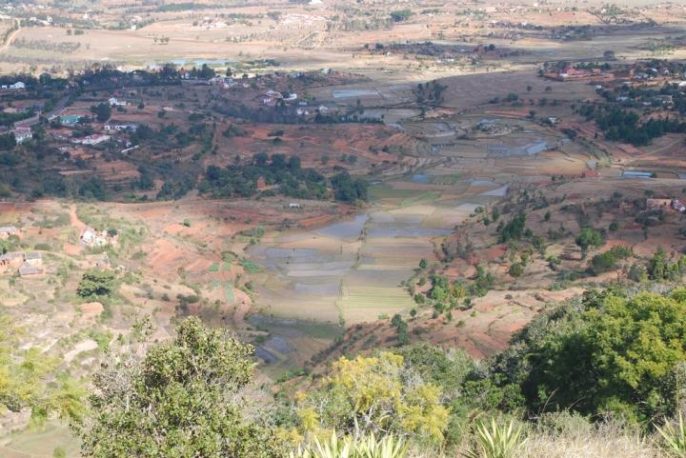
For decades, the colonization of Madagascar has been one of the most puzzling mysteries of human history. Although Madagascar is only a few hundred kilometers from the east coast of Africa, the language spoken there, known as Malagasy, belongs to the same group of languages spoken in Southeast Asia and the Pacific Islands located thousands of kilometers away. This linguistic affinity suggests that Madagascar was colonized by settlers from Southeast Asia and the Pacific. Genetic and cultural evidence also support this theory. However, no concrete evidence has been found that points to the presence of Southeast Asian colonizers on the island. Now an international research team has found ancient Asian crops such as rice and mung beans as evidence of the presence of Southeast Asian settlers on the island.
Digging for clues
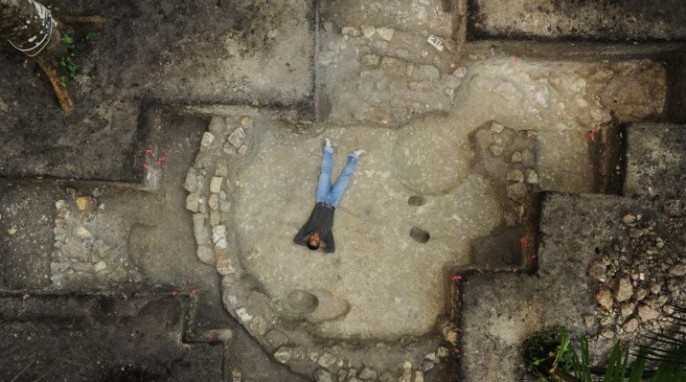
In their quest to search for evidence, an international team of researchers examined ancient plant remains dating between 650 to 1200 CE from recent excavations at 18 sites located in Madagascar, the coasts of East Africa, nearby islands east of Madagascar, and the Comoros archipelago between Africa and Madagascar.

Ancient rice and mung beans on Madagascar and Comoros suggest early colonization.
The researchers separated the sediment samples according to their sizes using a process called flotation, with which they added water to the samples and passed them through a sieve. Samples collected that were more than 1 mm long were probed for charred plant remains such as seeds and chaff, which were then identified to the species level.
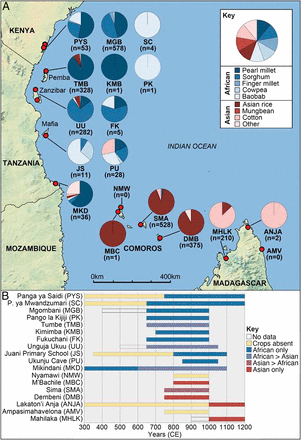
The team found 2,443 crop remains that originated from either Africa or Asia. The mainland and East African islands contained mainly African products, which included sorghum, pearl millet, finger millet, baobab, and cowpea. They were most likely brought from Western and Central Africa by migrating groups from the Iron Age. In contrast, sites in Madagascar and the Comoros Islands were dominated by Asian crops consisting of rice, mung bean, and cotton from as early as the 8th and 10th centuries CE. Rice was the most common cereal found in nearly all the crop remains.
“What was amazing to us was the stark contrast that emerged between the crops on the Eastern African coast versus those on Madagascar,” says Alison Crowther, lead author of the study.
Interestingly, rice was not a staple food in the Middle East during the Medieval period, and mung beans, in particular, were not used in Islamic cuisine. So the combination of rice and mung beans was rare. However, rice and mung beans were common crops in the Indian subcontinent from 500 BCE to 650 CE and 650 CE to 1200 CE. Thus, the researchers believe it is possible that Indian settlers brought rice and mung beans to Madagascar and the Comoros, but no other Indian crops have been found to support this possibility. This suggests the introduction of rice and mung from elsewhere.
Southeast Asian route to Madagascar
Rice was common in Southeast Asia during the same period when both rice and mung beans were grown in the Indian subcontinent, but the combination of both rice and mung beans was only found in a couple of locations: at Pacung in Bali, Indonesia, and southern Thailand. These crops are likely to have been introduced to Southeast Asia from the Indian subcontinent because of commercial and cultural exchange across the Bay of Bengal. Moreover, it is probable that both rice and mung beans were then introduced to Madagascar and the Comoros from the site in Bali.
Other evidence also supports this route of crop introduction. The analysis of the size and shape of the rice grains show that rice from Sima in the Comoros consists of both the indica and japonica varieties of rice. Genetic studies of the rice crops found that the two varieties of rice were also present in South Asia suggesting that early cultivation of rice was a mix of two types. Linguistic terms also support the movement of indica rice from South Asia to Borneo, and then to Madagascar.
Unexpectedly, both rice and mung beans were present in the Comoros earlier than in Madagascar. The researchers were surprised because Comorians today speak Bantu languages that come from Africa. It is possible that the first inhabitants of the Islands were from Southeast Asia, which was later subject to an influx of Bantu people.
Although there are lots of things that scientists still do not understand about Madagascar’s past, says Nicole Boivin, senior author of the study from Max Planck Institute for the Science of Human History in Germany. “Southeast Asians clearly brought crops from their homeland and grew them and subsisted on them when they reached Madagascar. This means that archaeologists can use those remains to finally start to provide real, material insights into the colonization process.”
Boivin and Crowther are conducting further research to find out more about the Southeast Asian settlers and the impact they had on Madagascar’s renowned birds, lemur, and tortoises, which are thought to have disappeared around the time when the settlers arrived.
Reference
Crowther, Alison, Leilani Lucas, Richard Helm, Mark Horton, Ceri Shipton, Henry T. Wright, Sarah Walshaw, Matthew Pawlowicz, Chantal Radimilahy, Katerina Douka, Llorenç Picornell-Gelabert, Dorian Q. Fuller, and Nicole L. Boivin. “Ancient crops provide first archaeological signature of the westward Austronesian expansion.” PNAS 113(24) (May 2016): 6635-6640. doi: 10.1073/pnas.1522714113

About the Author
Neha Jain is a freelance science writer based in Hong Kong who has a passion for sharing science with everyone. She writes about biology, conservation, and sustainable living. She has worked in a cancer research lab and facilitated science learning among elementary school children through fun, hands-on experiments. Visit her blog Life Science Exploration to read more of her intriguing posts on unusual creatures and our shared habitat. Follow Neha on Twitter/X @lifesciexplore.