






Mid-August brought the first total solar eclipse since 2024. Where could you see it and what did people see?
On Wednesday, August 12, 2026, the moon’s path came between the Earth and the sun, causing total darkness for 2 minutes of daytime in parts of the world. This solar eclipse doesn’t happen every day, and it doesn’t happen everywhere, either. For this event, a partial view was more likely in much of the Northern Hemisphere, and the path of totality hit the Atlantic Ocean and parts of Greenland, Iceland, Portugal, Spain, and Russia.
Total and partial eclipse when viewed from Europe
For those in the path of totality, they can see the moon crossing in front of our view of the sun. A period of partial coverage lasts about 2 hours as the moon moves in front of and then past the sun. Totality is when the sun is totally blocked, for about 2 minutes in the middle of the coverage period. NASA reported many cities in Spain with totality or close to it, including Valencia, León, and Zaragoza. Reykjavík, Iceland, also had totality.
A partial eclipse, on the other hand, is one seen outside the path of totality. The sun is never fully blocked. For example, UK and Ireland observers could catch the moon covering 90 to 96 percent of the sun at the peak of the eclipse depending on their location. In North America, by contrast, cities like Detroit and New York had less than 10 percent coverage. Portland, Maine, and Montreal, Canada, both had about 19 percent coverage. But Europe and North Africa had a much better view: over 80 percent in cities like Oslo, Berlin, and Casablanca.
Science Connected’s Steven Spence captured a live image of partial coverage in Passau, Germany, where the maximum eclipse coverage was about 89 percent. Here is an image of the eclipse at its maximum coverage at 8:15 pm local time. The eclipse happened around sunset.
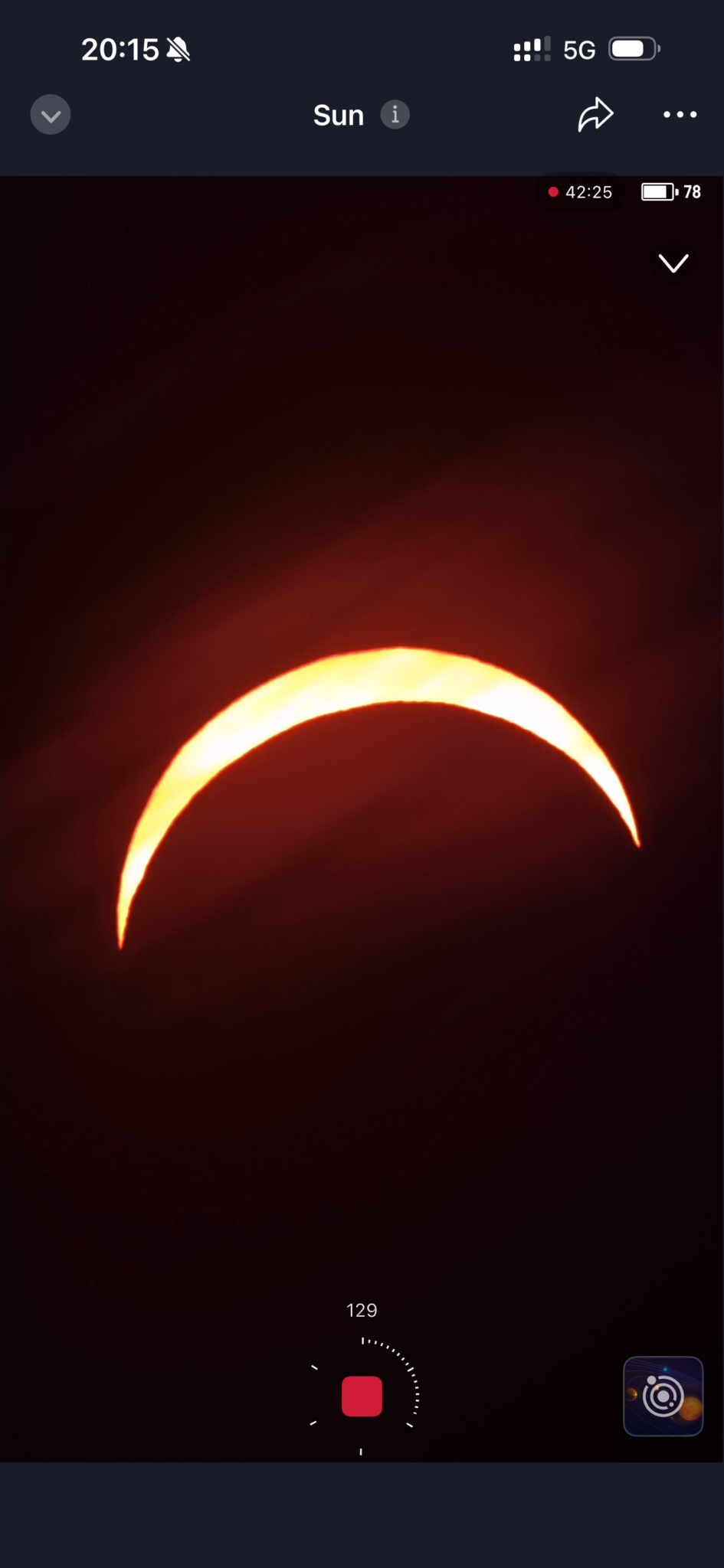
Whether it is with the help of a smartphone sun filter, a telescope with a solar filter, eclipse glasses, a pinhole camera, or a livestream, a solar eclipse is a unique yet global experience.
Want to learn more about solar eclipses?
Steven Spence also photographed the phases of the 2015 Solar Eclipse from Stuttgart, Germany.
In Illinois, Jeff Goldberg photographed A Trip to Totality: Experiencing the 2017 Solar Eclipse.
Check out more information and data on NASA’s coverage of the solar eclipse: https://science.nasa.gov/eclipses/future-eclipses/total-solar-eclipse-on-august-12-2026/.
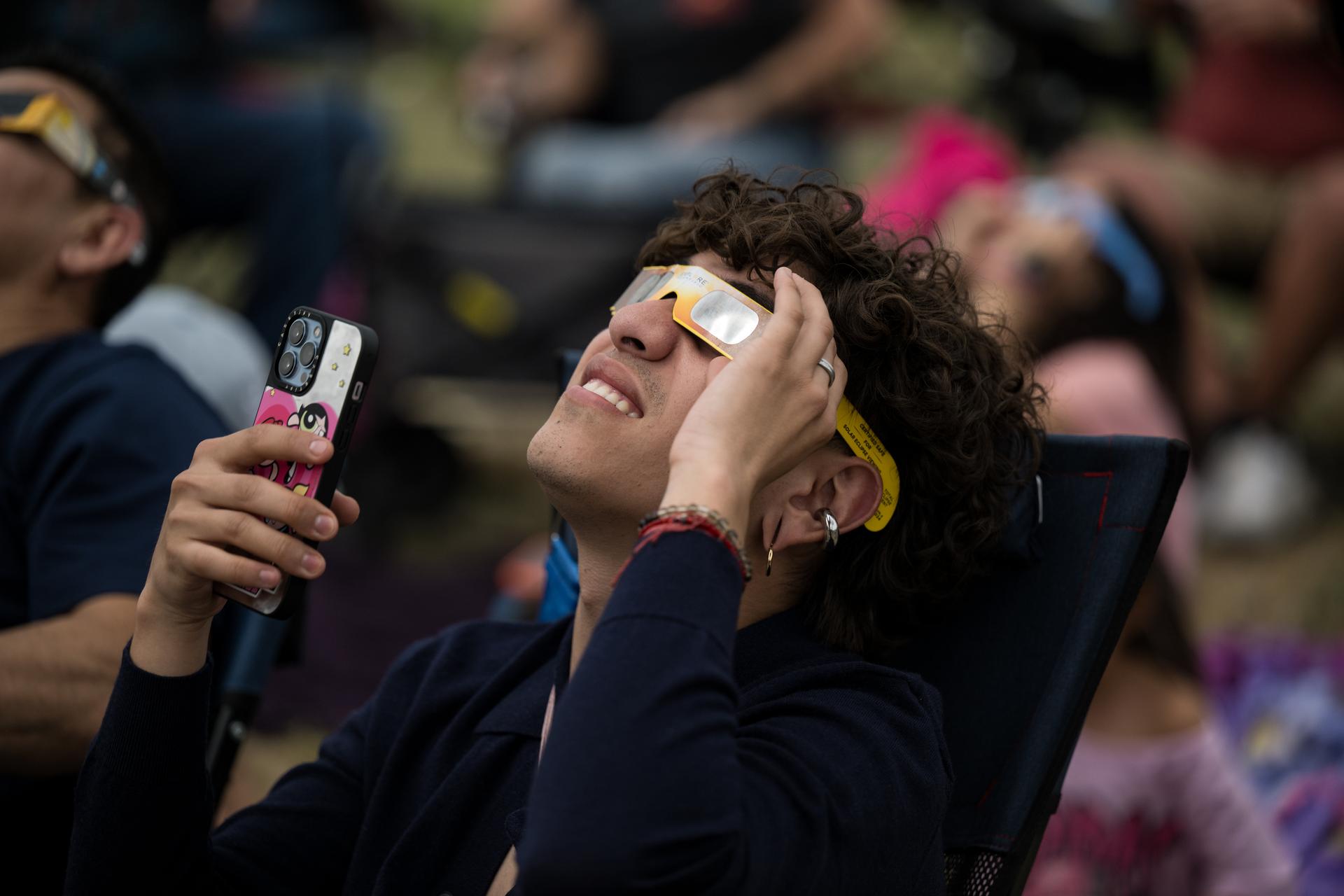
Featured image is of people watching the April 8, 2024, total solar eclipse through protective glasses in Kerrville, TX. Photo Credit: (NASA/Aubrey Gemignani)
RELATED: This was a solar eclipse, but you could also witness a lunar eclipse.