







Scientists and chefs team up on a cooking class that explores what fermentation in foods like kimchi, chow chow, and kombucha teach us about microbes.
By Nigel Chimbetete
The first time I finished reading the scientific findings I will share with you in this article, I thought to myself: “A biotechnologist, a chef, and a representative of the public sat at a bar, and everyone left afterwards delighted that they learnt something new about something.”
The world is on a fast track of technological expansion, driven by inspired scientists, artisans, innovators, and talent alike. The pace at which breakthroughs emerge from these fields makes it challenging for some to grasp and learn from them. Often, the public feels like science is too abstract, with “complex equations and jargon”; recipes too complicated, with fancy pans and exotic ingredients. These perceptions from the public create a paradox: The same traditional recipes that we have grown to enjoy in our homes carry answers and explanations to scientific questions of today.
Scientists from North Carolina State and chefs specializing in fermented foods formed a unique collaboration to bridge the gap between the Kitchen and the Laboratory. As Erin McKenney, co-lead author of the project and assistant professor of applied ecology, put it: “Developing techniques that both advance our scientific understanding of the world and engage the public in scientific endeavors is critical to the mission of both science museums and land-grant universities. That makes this work particularly rewarding for everyone involved in this project.”
Designing a fermentation workshop
The chosen participants of the public gathered at the Museum of Natural Sciences in Raleigh, North Carolina, where the scientists and local fermentation experts organized cooking-style workshops. The goal of this alliance was to assess whether participatory cooking workshops with fermented foods could help educate the public on the importance of microorganisms (bacteria/fungi) in nature and health. In addition, the researchers also aimed to collect scientific data related to the growth behaviors of microorganisms involved in the fermentation process.
Each cooking workshop was focused on a fermented food item:
- Kimchi: a traditional Korean dish comprised of cabbage, radish, and spices.
- Chow Chow: a relish commonly fermented in the southern region of the United States and which typically contains cabbage, green tomatoes, onion, and green pepper.
- Kombucha: a tea fermented by SCOBY “symbiotic culture of bacteria and yeast”.
Background on fermentation
Fermentation is a process that occurs naturally, whereby microbes (bacteria, mold, or fungi) break down carbohydrates/sugars and other components of food to produce byproducts such as acids, alcohols, and gases. These products can preserve the matrix of the food and contribute to the flavor and aroma of the final product.
In the workshops, participants were also informed about the culture and history of each dish by the chefs. At the same time, scientists circled nearby to provide further information on how the behavior of the microbes would be studied and analyzed.
RELATED: Cooking, Evolution, and Brain Growth
Microbial relationships: a sour topic
This study was not the first attempt they had conducted in developing scientific experiments that engaged the public. A previous study of sourdough production proved to be too variable. For instance, sourdough starters constantly require feeding (by adding more flour, a carbohydrate). Participants had struggled to manage the schedule and produce reliable data. Kimchi, Chow Chow, and Kombucha were more replicable and reliable hands-on experiments.
The researchers explored two ideas:
Diversity begets diversity: The more ingredients you add, the more microbial diversity you may see. To test this first hypothesis, kombucha was made using three different teas: black tea, green tea, and a mix of both. For chow chow, the recipe included 1 to a maximum of 4 vegetables.
Relatedness matters: Ingredients that are closely related to each other, such as cabbage and radish, may not boost microbial diversity as much as ingredients that are less closely related. The idea is that distantly related foods offer more distinct resources, encouraging a broader range of microbes. To test this second hypothesis, they compared kimchi made with either cabbage or radish, and kombucha made with either green tea or black tea.
RELATED: How a Green Tea Antioxidant Helps Fight Cancer
The language of living organisms: What’s in the jar?
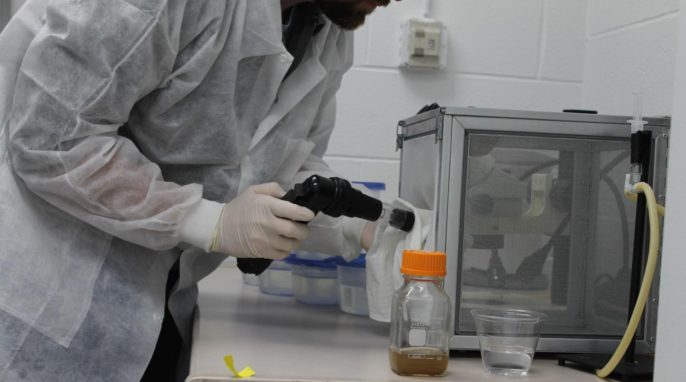
To identify and quantify the microbes in the fermented foods, the researchers analyzed DNA samples from the samples. Every microbial species has a unique DNA sequence, which makes it a target for identifying and quantifying them. A specialized DNA extraction kit was used to extract DNA from the microbial cells in the sample. As you can imagine, the amount of DNA in the samples and species translates to a lot of data. Using data tools in the field of bioinformatics, the researchers processed the data and uncovered patterns and relationships in the microbial ecology systems of the fermentations.
Overall, among all ferments, they identified four abundant species: Leuconostoc mesenteroides, Lactococcus lactis, Latilactobacillus sakei, and Weissella koreensis.
The First Hypothesis: Adding vegetables or a variety of teas to a recipe would yield more microbial diversity. This assumption proved not to be the case, as the chow chow and kombucha samples did not exhibit a diverse group of microbes despite the addition of more ingredients during fermentation.
The Second Hypothesis: The results from the next hypothesis showed that cabbage kimchi contained a more diverse group of microbes compared to radish-based kimchi. Tea choice, based on the fact that they were more closely related, showed decreased diversity of microbes. Therefore, these results suggest that the relatedness of ingredients is more important than the amount of ingredients if the intention is to create a more diverse profile of microbes in a fermented product.
As expected, as fermentation progressed in all fermentation workshops, the acidity of the samples decreased because of the secretion of mainly two acids: lactic and acetic acid.
Reflections and next steps
The workshops achieved their goal of sparking curiosity in the public, as well as collecting insightful scientific data. Chefs traded their recipes and knives for microbiological insights, and the public worked alongside to create delicious final products teeming with healthy life.
Christina E. Roche, co-lead author, admitted she had little experience teaching science before leading the workshops. Still, the process taught her to weave biotechnology with food preparation for future work. Like Christina, participants had some “aha moments” when they understood how pivotal acid production was to both flavor and preservation.
Sarah Michalski, who led the kombucha workshops, summed it up nicely: “How we share cultures and engage with the public matters… It’s an untapped opportunity to show how environment and ingredients shape your ferment.”
Despite the success the researchers had in their workshops, there were a few pitfalls that they wish to revisit and advise on future studies. Because DNA analysis samples take time, participants were already dismissed from the study by the time the results were processed. In follow-up experiments, they imagine that data updates can be presented in tandem with the workshops to help connect the numerical findings with what the participants see, smell, and taste. Moreover, follow-up sessions would foster deeper connections that highlight the nutritional and health benefits of fermented foods, ultimately making the experience more immersive.
Participatory science is becoming a popular avenue for educating the public about scientific knowledge. You, the reader, can try out a fermentation recipe of your choice by following one provided in this research work by clicking this link in the reference below.
Happy Fermentation!
Reference
Berman, H. L., McKenney, E. A., Roche, C. E., Michalski, S., Kwon, S. H., Weichel, E., Matson, A., Nichols, L. M., Alvarado, S., Horvath, J. E., & Dunn, R. R. (2025). Cooking-class style fermentation as a context for co-created science and engagement. Microbiology Spectrum, 13(10), e02660-24. https://doi.org/10.1128/spectrum.02660-24

About the Author
Nigel Chimbetete has a PhD in Food Science, specializing in Nutritional Biochemistry and Food Product Development. He is passionate about all topics surrounding Food Biochemistry & Food Sustainability. Outside of the lab, Nigel enjoys spending time with his family, cooking, travelling, and playing five-a-side soccer with his local community. Connect with him through @ChimbesHealth on X and on Instagram @dr.chimbeshealth.