







Sea-friendly plastic is the newest project for material scientists: plastic that can dissolve in water to reduce microplastic pollution.
By Reshmi Thampy
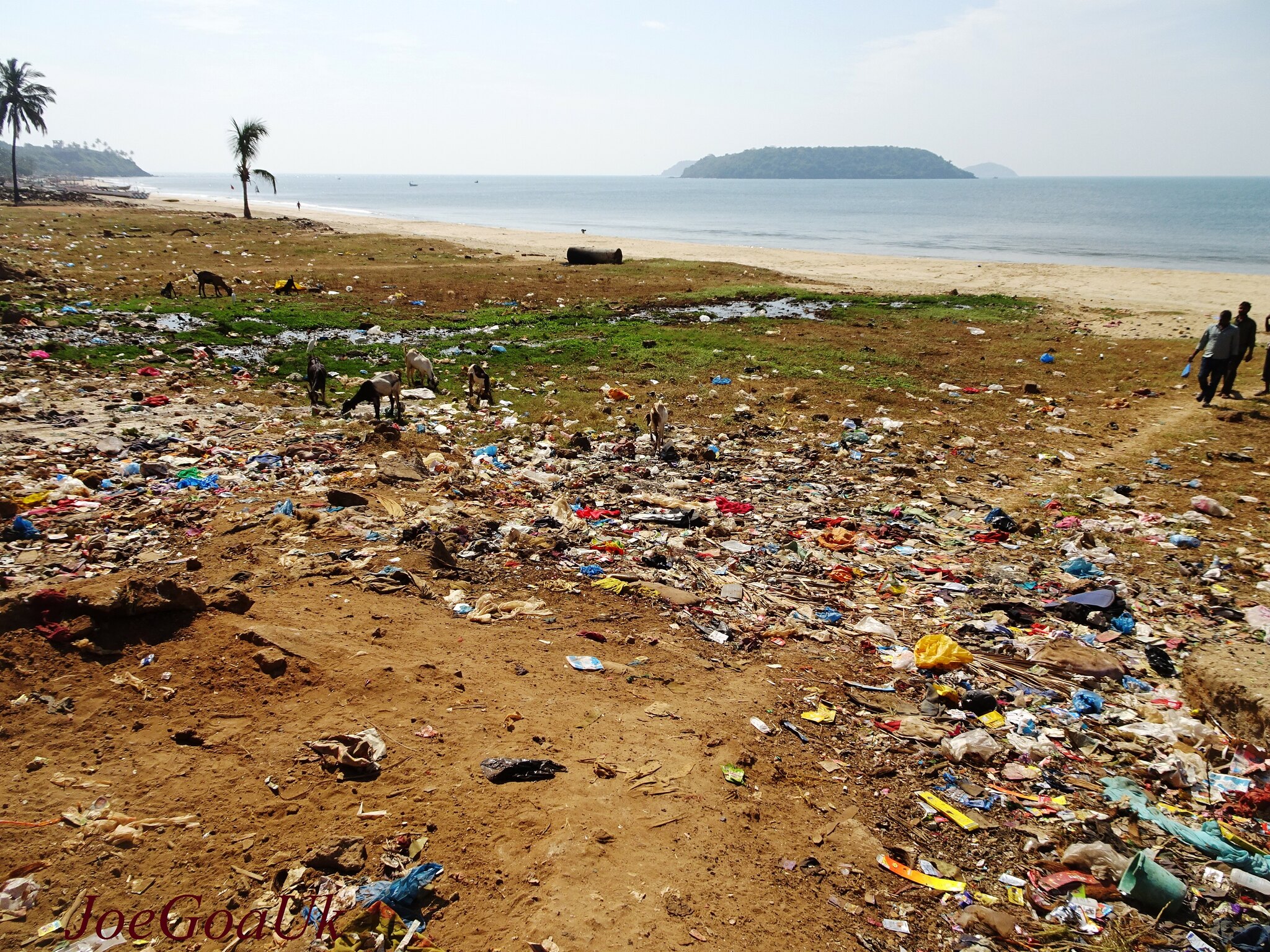
Whether it be sea or soil, microplastics polluting the environment has been an ongoing crisis for decades. Researchers have found an alternative sea-friendly plastic that does not harm the sea and can improve soil fertility.
Tiny pellets, huge problem
Small plastic pellets of 1–5 mm diameter washed ashore the coast of Kerala, India, following a shipwreck declared as a state-level tragedy on May 25 this year. Called “nurdles,” these pellets are the second largest source of microplastic pollution worldwide (the first being synthetic textiles). The largest spill of nurdles was recorded in 2021 when the X-Press Pearl shipwreck occurred near the coast of Sri Lanka.
While nurdles are not toxic, they can be mistaken for small fish by predators. They can also act like sponges for dangerous chemicals, or even become “rafts” for bacteria like E. coli. Needless to say, in the months following the disaster, Sri Lankans saw dead turtles, dolphins, and even whales wash ashore with nurdles in their bodies.
Similar incidents have happened and will continue to occur around the globe. But every crisis presents an opportunity to do better. While prevention is always said to be the best cure, such disasters are unpredictable and we need to take a different approach.
A sea-friendly plastic
A research team led by Takuzo Aida at the RIKEN Center for Emergent Matter Science (CEMS) offers a potential solution. While biodegradable plastics are not a new concept, even polymers like polylactic acid (PLA) break down into microplastics in water because of their insolubility. Ideally, plastics should break down easily into their building blocks (polymers to monomers), and be recyclable and nontoxic, without compromising any property you associate with plastic. Working on these aspects, the researchers created a new kind of supramolecular sea-friendly plastic—a plastic that can easily break down in seawater.

The chemistry
The researchers used sodium hexametaphosphate or SHMP (the chemical name of water softener Calgon) and guanidinium ion. The latter is a popular ion in supramolecular chemistry thanks to its binding properties. The team followed a polymerization process that involved desalting to combine these compounds, which were selected because of their capability to form salt bridges in water. The salt bridge refers to bonds (not covalent bonds, but electrostatic interactions that do not involve full electron transfer) between SHMP and guanidinium (SHMP is salt here, acting as a polyanion, and guanidinium as cation). Salt bridges are among the strongest non-covalent interactions that occur in liquids.
Once the plastic with these salt bridges hits seawater, however, actual salt or other electrolytes in seawater bring in electrolytes like Na+, K+, etc. that compete with guanidinium ions to interact with SHMP. This unravels the previous salt bridges. Since the polymerization process involves desalting, this process of reversing the polymerization reaction is called resalting or adding salt to the equation again. Resalting the plastic would supply it with electrolytes that now interact with SHMP, reversing the polymerization reaction and causing the salt bridges to break down within hours (actual time taken depends on size of the material). This would mean that unlike other plastic that floats around and chokes marine life, this plastic would dissolve, thanks to the ions in seawater, making it sea-friendly.

In addition, if the sea-friendly plastic gets mixed in the soil, degradation could happen within 10 days and would even be beneficial for soil, as SHMP is commonly used in agriculture as a chelating agent. (SHMP binds to metal ions like zinc and manganese, making them more soluble, and easier for plants to absorb.)
A near perfect recycling
The team also investigated the recyclability of the new material. Shortly after the sea-friendly plastic material was dissolved in salt water, they added ethanol to the solution, causing SHMP molecules to precipitate. (SHMP molecules rise to the surface of the solution, allowing it to be separated as precipitate and the rest of the solution as supernatant.) Ninety-one percent of SHMP was recovered. Evaporating the supernatant (solution remaining after removing the precipitate) gave white guanidinium powder with 82 percent yield. These high yield values show that the plastic is capable of “closed-loop” recycling, or recycling where a product can be used and then reprocessed as a raw material for the same product.
RELATED: Bacteria Has Natural Capacity to Recycle Plastics
Shifting from lab to market
As promising as the material is, whether or not you will see sea-friendly plastic in the supermarket depends on the stability of the manufacturing process, the ensured stability of the plastic in places with high humidity, and its cost-effectiveness. In a humid environment, the material absorbs water from its surroundings and slowly gains weight. Research on using hydrophobic coatings like parylene to improve the stability of the material in water is ongoing.
Even though challenges remain, the material offers a hopeful step toward tackling the microplastic crisis that we make worse each day.
This study was published in the peer-reviewed journal Science.
References
Chaitanya, SV. K. (2025, May 28). Plastic nurdle spill from Kerala shipwreck reaches Tamil Nadu. The New Indian Express. https://www.newindianexpress.com/states/tamil-nadu/2025/May/28/plastic-nurdle-spill-from-kerala-shipwreck-reaches-tamil-nadu-2
Cheng, Y., Hirano, E., Wang, H., Kuwayama, M., Meijer, E. W., Huang, H., & Aida, T., (2024). Mechanically strong yet metabolizable supramolecular plastics by desalting upon phase separation. Science, 386(6724), 875–881. DOI: 10.1126/science.ado178
Limb, L. (2025, March 17). What are nurdles? “Sheen” of plastic pellets spotted in the North Sea after ship crash. Euronews. https://www.euronews.com/green/2025/03/17/what-are-nurdles-sheen-of-plastic-pellets-spotted-in-the-north-sea-after-ship-crash
McVeigh, K. (2021, November 29). Nurdles: the worst toxic waste you’ve probably never heard of. The Guardian. https://www.theguardian.com/environment/2021/nov/29/nurdles-plastic-pellets-environmental-ocean-spills-toxic-waste-not-classified-hazardous
The Problem. The Great Nurdle Hunt. https://www.nurdlehunt.org.uk/the-problem.html
PTI. (2025, May 29). Kerala government declares Liberian ship capsize a disaster. Deccan Herald. https://www.deccanherald.com/india/kerala/liberian-cargo-ship-capsize-disaster-kerala-government-3562550
Shaji, K A. (2025, May 27). MSC ELSA 3 sinking: tiny plastic pellets found along Thiruvananthapuram coast, raising concerns about marine pollution. Down to Earth. https://www.downtoearth.org.in/pollution/msc-elsa-3-sinking-tiny-plastic-pellets-found-along-thiruvananthapuram-coast-raising-concerns-about-marine-pollution
Featured image: Artistic rendering of the new sea-friendly plastic. Cross-linked salt bridges visible in the plastic outside the seawater give it its structure and strength. In seawater (and in soil, not depicted), resalting destroys the bridges, preventing microplastic formation and allowing the plastic to become biodegradable. Credit: RIKEN, edited. Illustration credit: Reshmi Thampy.
About the Author
Reshmi Thampy is a postgraduate in structural and construction engineering, currently having serious fun at IITM, working on gamified teaching and learning. She loves all things green and would have been a farmer in a parallel universe. In this one, she is an avid reader and an occasional writer. She loves reading about new advances in science and technology, and views the field of science journalism as an exciting one where she can share her curiosity with others. You can reach her at reshmithampy@proton.me.