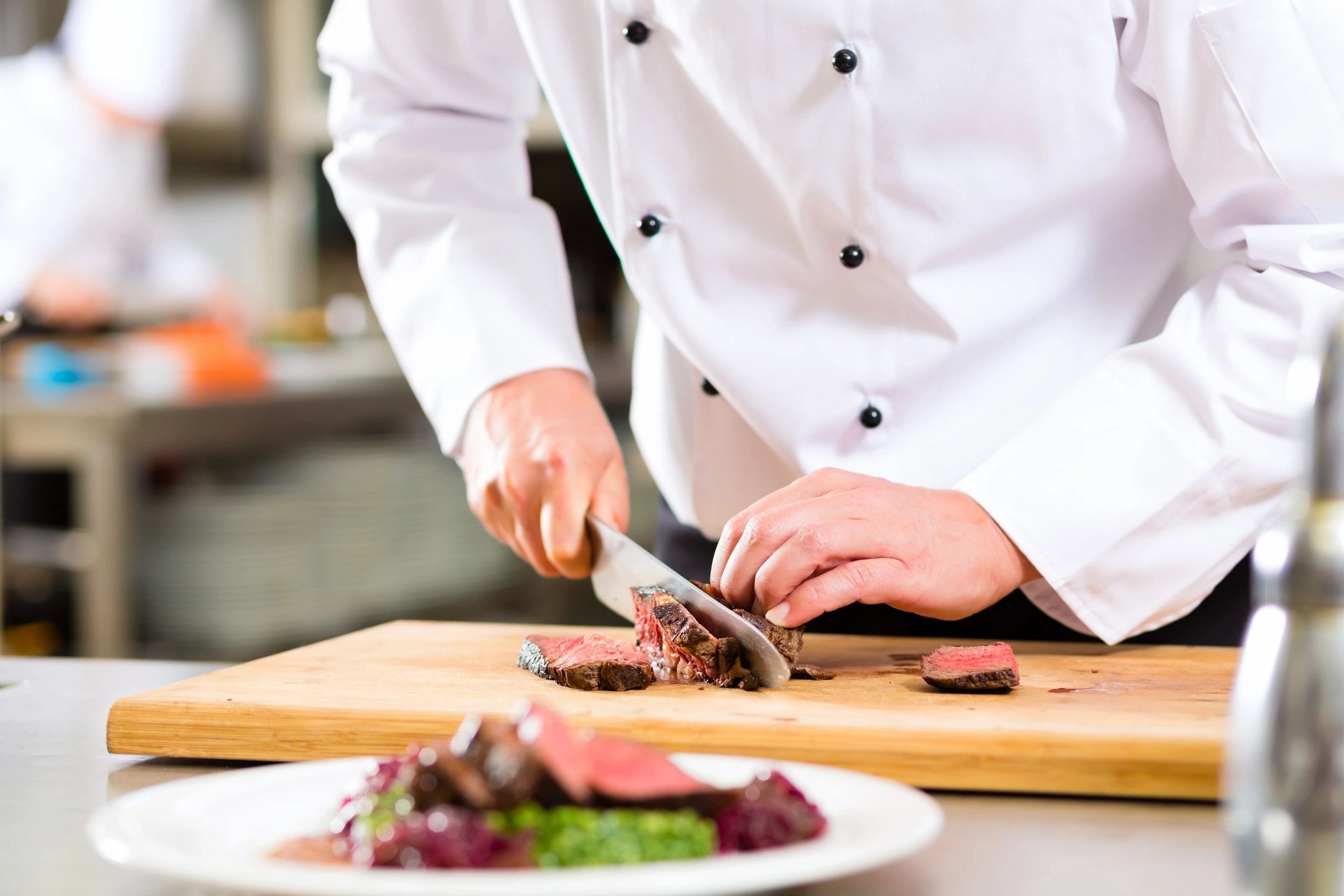







Cutting boards can serve as reservoirs for bacterial transfer when not adequately sanitized, leading to foodborne illnesses.
As of early 2026, the FDA is investigating 18 active foodborne illness outbreaks involving 5 major pathogens. These cases account for an estimated 7,300 illnesses and 400 hospitalizations. At this rate, foodborne outbreaks in the United States may surpass previous years’ numbers, and this trend is a major concern because food is part of humans’ everyday life.
A major reason it feels like we’re losing the fight against these deadly pathogens is the rise of antimicrobial resistance (AMR). Pathogens, like all living organisms, continuously evolve to survive. Over time, they adapt to withstand antimicrobials and other natural forces designed to kill them. Microbial life takes the phrase “What doesn’t kill you makes you stronger” quite literally.
Understanding how pathogens are eliminated is a single problem that is easy to solve. However, the second and most concerning problem, which is becoming the major focus, is understanding how they survive, spread, and resist treatment. The newest clues aren’t coming from industrial food plants or massive outbreak data, but right from our own kitchens.
Why have cutting boards become a prime suspect?
Between 2014 and 2023, Brazil recorded 6,874 foodborne outbreaks, and 34 percent occurred in households. Those numbers mean that more than a quarter of foodborne illnesses begin at home, with the primary reason being food handling.
Our current understanding of pathogen behavior comes from laboratory contamination studies or large-scale industrial research. But a team of scientists at São Paulo University took a different approach. They collected real cutting boards from real households to understand what could be happening on the surfaces we use every day. This investigation is one of the first to explore and analyze domestic cutting boards as potential reservoirs of contamination.
What are the pathogens of interest?
The researchers focused on two main pathogens: Listeria monocytogenes and Escherichia coli. Cattle can carry E. coli O157:H7 asymptomatically, meaning they can carry it without getting sick. They harbor the pathogen mainly in their intestines; therefore, the pathogen is present in their fecal matter. During slaughter, fecal residue from hides or intestines can contaminate meat. Furthermore, contaminated water coming from feedlots or manure storage facilities can also be affected. This same water can then be used to irrigate crops, which is how pathogens end up in our lettuce and other leafy greens.
Listeria thrives in cooler, wet temperatures such as soil, water, and food-processing environments. L. monocytogenes’ ability to form biofilms and adhere to drains, floors, and equipment can persist for months to years. However, listeria is not heat-resistant. Listeria can grow at refrigeration temperatures, which is how pathogens end up in ready-to-eat foods such as your deli meats and guacamole, and ultimately ruin your charcuterie board plans.
What lives on and inside the little cracks on our cutting boards?

The researchers collected a hundred cutting boards for the study—50 plastic and 50 wooden. The researchers used a sterile saw under sterile conditions to remove 4 cm circular fragments for testing. Out of the 100 boards, 8 were contaminated with either E. coli or L. monocytogenes. That may seem small, but one contaminated board can process food for an entire household and potentially your honored guests, and your guests may take leftovers and process them on their own cutting boards. That can quickly add up to many illnesses and hospitalizations.
RELATED: Sepsis Survivors Are More Vulnerable to Infection
A peek into the defensive armory and strategies of pathogens
The DNA of listeria strains found on cutting-board surfaces was shown to contain gene sequences that code for the ability to stick to surfaces, perforate other cells’ membranes, and move from one invaded cell to another. These qualities make listeria exceptional at evading antimicrobials and enhancing infection. The E. coli strains also contained genetic sequences with slightly different but still devastating abilities. They contained genes that code for the Shiga toxin, which primarily causes illness, but they could also acquire genetic sequences from neighboring cells that boost their own antimicrobial resistance.
The isolated strains from both pathogens exhibited low adhesion. Still, these results should be viewed with the understanding that biofilms can form more readily and remain more stable in real kitchens over time due to changes in temperature, moisture, other microbial communities present, and non-standardized sanitation methods.
About 38 percent of L. monocytogenes and 87 percent of E. coli isolates were ESBL producers. ESBLs (extended-spectrum β-lactamases) are enzymes that play a significant role in deactivating or breaking down antibiotics meant to destroy the pathogen. For example, antibiotics such as penicillin are meant to destroy these pathogens; however, when ESBLs are present, they destroy the antibiotic before it can reach the pathogen. This means lingering pathogens are extremely hard to treat or kill.
RELATED: Parasites versus Roman Soldiers: Fort Life Along Hadrian’s Wall
The study did not compare various sanitizers in depth, but the results show that even with lower bacterial counts, pathogens can persist longer and spread unchecked. The physical condition of cutting boards, including moisture cycles, organic residue, and crevices, can promote adherence and create ideal biofilm conditions.
What do we do at home to combat pathogens that have escaped factories and fields?
By the time you read this article, more than a hundred outbreaks would have occurred globally. Consumers must adopt better hygiene practices, such as thoroughly cleaning cutting boards and utensils after every use, replacing boards when grooves start to appear, allowing boards to dry completely, and using separate boards for different food types.
Happy and safe cooking!
This research was published in the peer-reviewed Journal of Food Protection.
Reference
de Oliveira, J. P., da Silva, D. C., Tadielo, L. E., … & Pereira, J. G. (2026). Domestic cutting boards as reservoirs of virulent and antimicrobial-resistant Listeria monocytogenes and Escherichia coli. Journal of Food Protection, 89(9), 100861. https://doi.org/10.1016/j.jfp.2026.100861

About the Author
Nigel Chimbetete has a PhD in Food Science, specializing in Nutritional Biochemistry and Food Product Development. He is passionate about all topics surrounding Food Biochemistry & Food Sustainability. Outside of the lab, Nigel enjoys spending time with his family, cooking, travelling, and playing five-a-side soccer with his local community. Connect with him through @ChimbesHealth on X and on Instagram @dr.chimbeshealth.