







Identifying the bacteria responsible for a patient’s pulmonary disease can speed up treatment, and a new tool could help.
By Rhiannon Gamlin
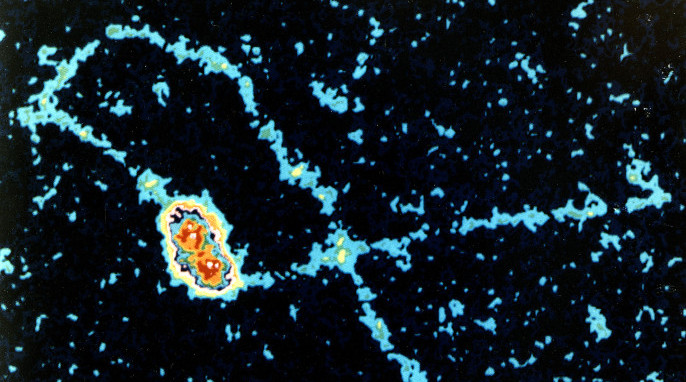
Many people have heard of tuberculosis, a bacterial disease that affects the lungs. But while Mycobacterium tuberculosis (MTB) has drawn decades of research, similar bacteria have been under the radar. Professor Dakang Xu and colleagues from Shanghai Jiao Tong University School of Medicine are working to make these “under the radar” bacteria more easily detectable by trialling new and innovative identification technologies.
A microscopic organism called Nontuberculous Mycobacteria (NTM) is a rising concern for healthcare professionals as a growing cause of pulmonary disease. Pulmonary disease is any condition or disorder that affects the lungs, making it incredibly difficult to breathe and to provide enough oxygen into our blood. Mycobacterium, like NTM, is a genus of bacteria naturally found in places like the soil, dust, or even water. There are hundreds of thousands of different NTM species, making it incredibly difficult for clinicians to properly find and treat patients. However, what if I told you there was a way to quickly and accurately distinguish between these different species?
How is this NTM detection possible?
Current diagnosis tools used to detect pulmonary disease rely on a combination of chest X-rays and CT scans, breathing tests, and microbiological tests, which are limited by the slow growth of mycobacteria. Results can take days to even weeks. Shortening this time interval is crucial for a speedy diagnosis and delivering treatment plans for the patient.
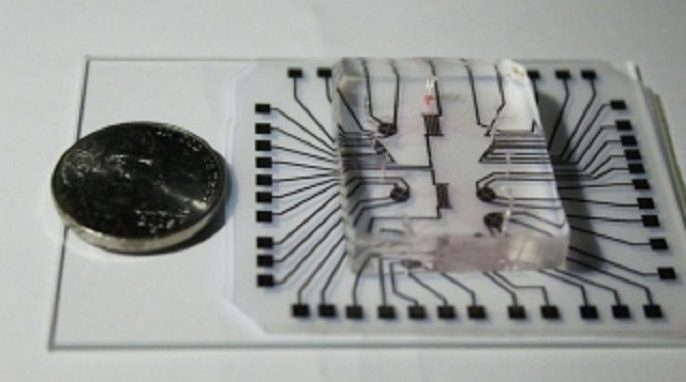
Professor Dakang Xu and colleagues analyzed a new diagnostic platform developed by Hongquan Gou and colleagues (2026) and how it can help achieve rapid, broad, and species-specific detection of NTM. This technology is called CANDI (CRISPR-Assisted Nanodroplet Differential Identification, where CRISPR is short for Clustered Regularly Interspaced Short Palindromic Repeats). It essentially is a highly specific medical test designed to quickly and accurately identify different types of bacteria from a single patient sample.
Think of it as an incredibly fast, passenger-specific security screening line at an airport. First, the test takes the patient’s sample and makes millions of copies of any bacterial DNA present; similar to placing all airplane passengers into one waiting room. The sample is then split into little microscopic droplets so that individual strands of DNA can be isolated and inspected thoroughly. It is inside these tiny droplets that scientists use CRISPR, which acts like an expertly trained security guard holding up a specific “wanted” poster. This security guard can also hold up multiple different wanted posters at once, meaning it can detect up to 5 different types of bacteria simultaneously.
RELATED: Water Quality Monitoring by Bacterial Biosensors
What does the future with this technology look like?
Due to the slow-growing nature of mycobacteria, traditional tests used can take up to weeks to produce reliable results. With CANDI, answers are given much faster and with extreme accuracy. Using this technology doesn’t just reveal if a patient is sick but instead tells them exactly which strain of bacteria is the cause of it.
However, it is important to note that while this strategy is promising, there are several limitations that need to be addressed before it can be used in real-world clinical settings. For example, bacteria are constantly evolving and changing their DNA. The CANDI system relies on pre-made “wanted posters” to spot the bacteria. Therefore, if a new strain alters its genetic look, it has essentially disguised itself. Due to the bacteria changing, scientists cannot just design this test once and be done. They have to constantly monitor bacterial outbreaks around the world and update the test’s “wanted posters” as new strains emerge. So instead of replacing current diagnostic tools for pulmonary disease, CANDI complements them by helping doctors make faster, more accurate treatment decisions.
This study was published in the peer-reviewed journal LabMed Discovery.
References
Ghouneimy, A., Mahas, A., Marsic, T., Aman, R., & Mahfouz, M. (2022). CRISPR-based diagnostics: Challenges and potential solutions toward point-of-care applications. ACS Synthetic Biology, 12(1), 1–16. https://doi.org/10.1021/acssynbio.2c00496
Gou, H., Chen, L., Eick, K. L., Bao, D., Miner, T. A., Tran, D., Gan, M., … & Hu. T. (2026). A rapid CRISPR-based nanodroplet assay enables direct clinical identification of mycobacteria species. Science Translational Medicine, 8(867) https://doi.org/10.1126/scitranslmed.aef2648
Yang, Y., Xu., J., & Xu, D. (2026). Rapid, multiplexed identification of clinically relevant mycobacteria using CRISPR-nanodroplet technology. LabMed Discovery, 3(3), 100149. https://doi.org/10.1016/j.lmd.2026.100149
Featured image of a nebulizer and medications by Sincerely Media on Unsplash.
About the Author
Rhiannon Gamlin is a recent Biomedicine graduate with a passion for microbiology and science communication. She enjoys exploring recent findings in infectious diseases and wishes to highlight the relevance of biomedical research in everyday life. Find her on LinkedIn.