






Parasites spread through contaminated food and water, affecting Roman soldiers in the first century and people today.
The Roman supply fort of Vindolanda, occupied between the first and fourth centuries, was built to protect Hadrian’s Wall in northern Britain.
A recent study by scientists at Cambridge and Oxford, published in Parasitology, reports that some of the soldiers were infected with common parasites: roundworm (Ascaris species), whipworm (Trichuris species), and the protozoa Giardia duodenalis. All of these parasites are spread by oral fecal transmission, usually through contaminated food and water. While the fort had spring water and an extensive sewer system for disposal of human waste, it is quite possible that food and water was contaminated with feces through lack of hand and food washing.
This study shows that the parasites that infected Roman soldiers are the same that infect people today in places that lack sanitation. Due to parasite infection, the soldiers could have experienced malnutrition, digestive disorders, and abdominal pain, in addition to the other hardships of living on the northern edge of the empire and being responsible for protecting the fort and surrounding community.
Hadrian’s Wall and Vindolanda
Hadrian’s Wall was a defensive fortification commissioned by the Emperor Hadrian. The wall runs east-west from the North Sea to the Irish Sea in what was then the Roman province of Britannia. This section of the wall was protected by soldiers living in Vindolanda, a supply fort just south of the wall, between Corbridge and Carlisle, in Bardon Mill, Northumberland, Britain. The fort housed women and children as well as soldiers.
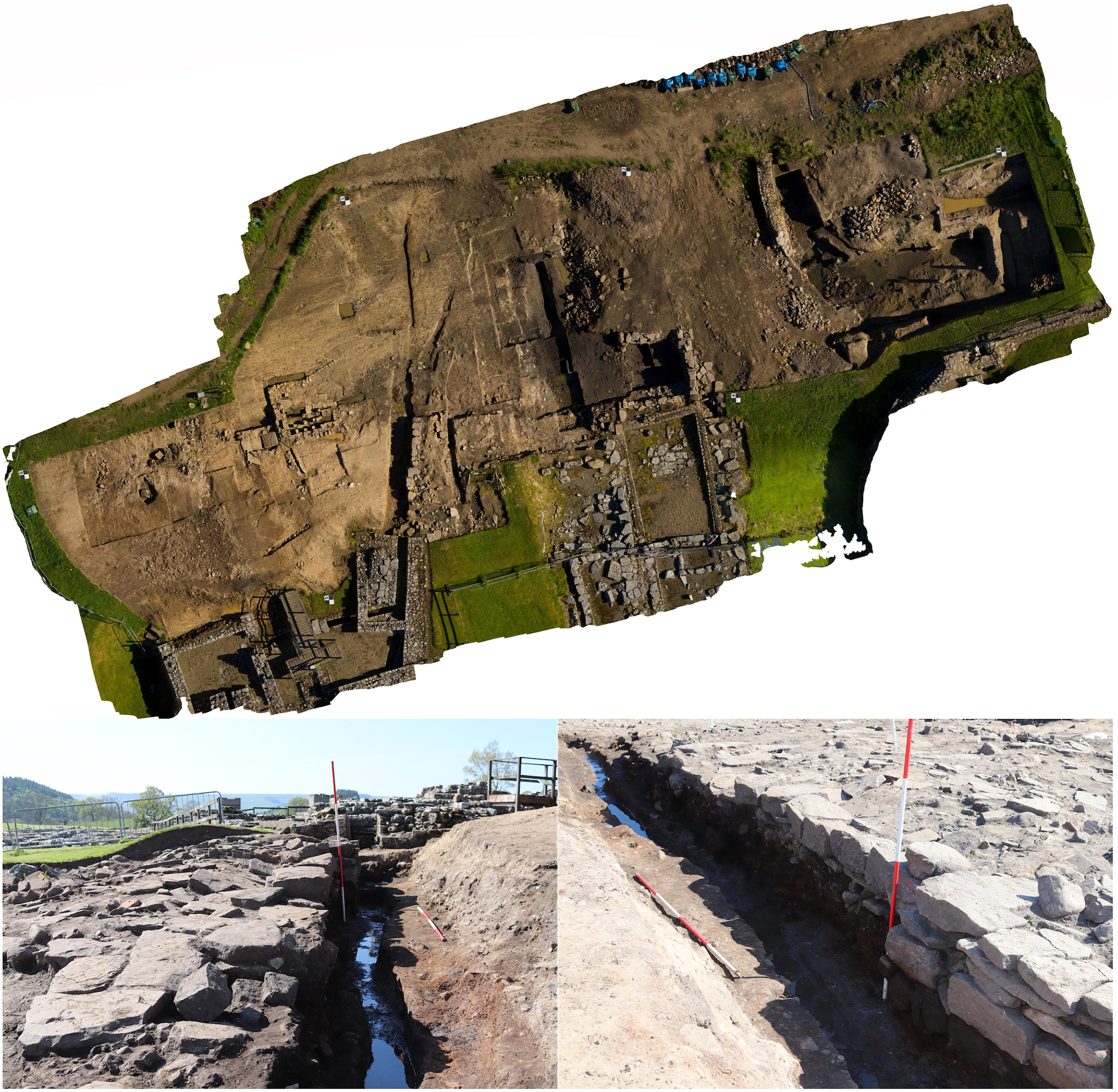
Inside the fort were two bath houses with spring water supplied through stone aqueducts and timber pipes made of alder inside oak boxes. There was a latrine building on the south side of the bath houses, which the BBC reported in 2014 had the oldest wooden toilet seats ever discovered. (Vindolanda has a very high water table and the anoxic mud preserved articles that would have decayed if oxygen was present.) Ditches removed water and waste.
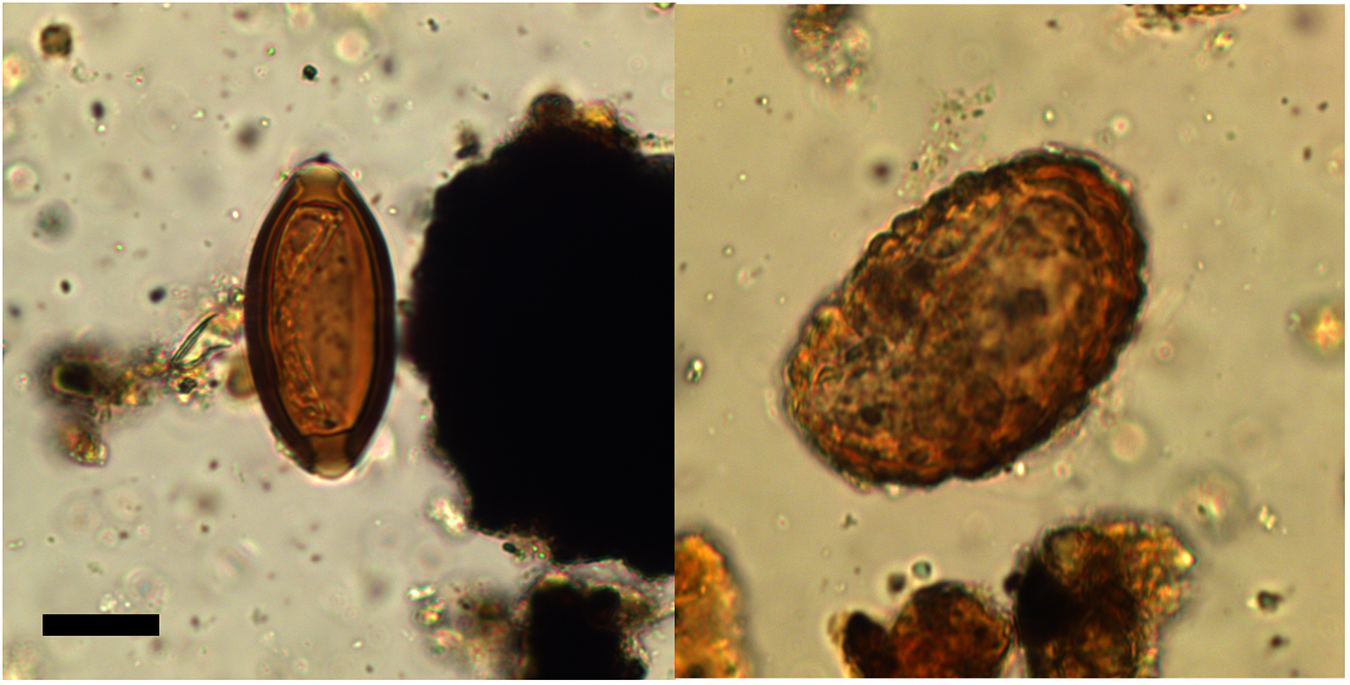
The study’s researchers took samples from these ditches, or drains, and inspected them for parasite eggs. Eggs from roundworms, Ascaris and Trichuris, were identified using a light microscope, and Giardia, a protozoa, was identified by ELISA (enzyme-linked immunosorbent assay).
Ascaris species (roundworm)
Ascaris is a parasitic intestinal roundworm, or nematode. One species, A. lumbricoides, affects humans, causing the disease ascariasis. This is the most common helminth infection worldwide today, with the WHO estimating that 24 percent of the world’s population gets infected. So it makes sense that it probably was common among Roman soldiers and their families living in forts in the first few centuries. Today, most infected people live in subsaharan Africa, Asia, and Latin America, areas with more tropical climates than northern England.
Ascaris species’ eggs are deposited in feces and transmitted to humans through oral fecal contamination. A. lumbricoides, the species that infects humans, is the largest parasitic roundworm. The adult worm can be more than a foot long and about a quarter-inch wide. Eggs are visible with common light microscopes. (We routinely looked at prepared slides of eggs, and of preserved adult specimens, in introductory biology labs in college.)
How Ascaris infections affect the body
When eggs are ingested, they hatch in the small intestine and are absorbed into the blood. The worms travel to the lungs and after ten days are coughed up and swallowed. The adult worms live in the intestine. Female worms produce 200,000 eggs a day. The eggs leave the body with feces and can be transferred to other people through contact with contaminated soil, food, or water.
Ascariasis can cause stomach pain, coughing, vomiting, and fever, but the majority of cases are minor and show no symptoms. Large infestations can cause intestinal blockage and death in severe cases.
Washing hands and food prevents infection, and today there are antihelminths that effectively kill the eggs and worms. But in Roman times, these drugs were not available.
In addition, a different species of Ascaris infects pigs. Since the Romans ate a lot of pork, it is possible that the eggs were from pigs as well as humans.
Trichuris species
Trichuris trichiura is the species of whipworm, another roundworm (nematode), that infects humans. The worm looks like a whip. Eggs of Trichuris species were found in the drains at Vindolanda. Trichuriasis occurs when worms are in the human large intestine. With large infestations, digestive upsets, pain, diarrhea, and rectal prolapse is possible.
Both ascariasis and trichuriasis are neglected tropical diseases, because they usually occur in tropical, wet climates, such as in Asia, Africa, and South America. Trichuriasis occurs in more temperate regions including in the southern United States. About 800 million people are infected with trichuriasis today. As with ascariasis, most infections lack symptoms. Also similarly, there are other species of Trichuris that infect pigs.
How Trichuris infections affect the body
Trichuriasis is similar to ascariasis, however, the whipworms do not cycle into the lungs. The eggs hatch in the small intestine, move to the large intestine, and remain until they are expelled with the feces. The adult worms are only about two inches long and females only lay 10,000 eggs per day. This difference may explain why the researchers found fewer Trichuris eggs than Ascaris eggs in the drain samples.
In any case of nematode infestation, even those without obvious symptoms, it is important to note that the worms are consuming food that would otherwise be used for growth, energy, and development of the infected organism.
Most people who have worm infestations have multiple worm infestations. It is not uncommon to have both ascariasis and trichuriasis at the same time, and sometimes people are also infected with Giardia duodenalis as well at the same time. Multiple and severe infestations can result in anemia, poor growth, and chronic dysentery. Most infected persons do not die. They just live with the hardship.
Giardia duodenalis
Giardia duodenalis is a protozoan that was also identified in the samples collected at Vindolanda. This protozoa is transmitted through the fecal oral route, just like the nematodes, and infestations cause severe diarrhea. Giardia is an anaerobic flagellate that colonizes and reproduces in the intestine of several vertebrate animals, causing the disease giardiasis. The active form of the organism swims around in the small intestine. It transforms to an inactive cyst and moves to the large intestine, and the cyst is expelled with feces. Today, hikers and backpackers know not to drink water on the trail without boiling it, to prevent giardiasis. Boiling water and cooking food kills the cysts and prevents infection.
The study researchers used ELISA to identify Giardia. ELISA is a process that identifies proteins known to be from the organism. Other animals can be infected with Giardia, so it is possible that the organisms were not from human waste, but it is highly likely since the samples come from the latrine drains.
The researchers found proteins associated with the cyst stage of the organism in their samples, which makes sense, since the cyst would be in the sewer with feces. These cysts would get ingested through contaminated food, but usually through contaminated water, and then they’d release the active flagellate forms into the small intestine.
Giardia infection symptoms and prevalence
Giardiasis usually has symptoms, unlike the nematode infestations; however, it is possible to be a carrier without symptoms. Infected people experience diarrhea, gas, pain, vomiting, tiredness, weight loss, and usually dehydration from losing so much fluid. A typical infection lasts about a month. Many infected people who recover have lifelong digestive problems due to damage to the small intestine, including lactose intolerance.
Giardia infects an estimated 2 to 5 percent of the population in developed countries and 20 to 30 percent in developing countries, mostly in Africa, Asia, and South America. Giardia duodenalis can live in temperate or tropical areas. It lives where sanitation is lacking and in places where animals defecate. There is no medication that effectively destroys the organism, or cures the disease. Although the disease rarely kills people, prolonged and recurrent infestations result in failure to thrive, digestive abnormalities, and reduced absorption of food. Roman soldiers with giardiasis would not have been effective in battle, or at protecting the wall.
Roman Wall Blues
The English author W. H. Auden published a book, Another Time, which included the poem “Roman Wall Blues.” He also wrote a script for a BBC radio broadcast on Hadrian’s Wall that aired in 1937. “Roman Wall Blues” is about a lonely soldier suffering in the cold and deplorable conditions at the forts along Hadrian’s Wall. The poem describes lice infestations, the cold and wet weather, and multiple diseases. Although Auden could hardly have known the actual conditions, it appears his description was fairly accurate.
More Roman history: Archaeologists at Ancient Roman Gold Mines
Historical significance
The results of this study support the idea that 2,000 years ago, Roman soldiers faced hardships that included parasite infections, very similar to the parasite infections people with poor sanitary conditions face today. It is also significant that these eggs and cysts were preserved for 2,000 years. The study researchers conclude that it is likely that Roman soldiers commonly suffered from gastrointestinal disturbances due to parasites. These results agree with evidence from other Roman forts and villages at relatively similar times, indicating that parasites affected the Romans throughout the empire.
This study was published in the peer-reviewed journal Parasitology.
References
Anorue, C. O., Anyanwu, I. N., & Chiamah, O. C. (2023). A cross sectional study on the prevalence of ascariasis among school children; a case study of Ikwo, Ebonyi State Nigeria. Medical and Pharmaceutical Journal, 2(2), 75–82. https://doi.org/10.55940/medphar202338
Hatam-Nahavandi, K., Ahmadpour, E., Badri, M., Eslahi, A. V., Anvari, D., Carmena, D., & Xiao, L. (2025). Global prevalence of Giardia infection in nonhuman mammalian hosts: A systematic review and meta-analysis of five million animals. PLoS Neglected Tropical Diseases, 19(4),e0013021. https://doi.org/10.1371/journal.pntd.0013021
Ledger, M. L., Flammer, P. G., Smith, A. L., Birley, A., & Mitchell, P. D. (2025). Parasite infections at the Roman fort of Vindolanda by Hadrian’s Wall, UK. Parasitology, (online First View), 1–9. https://doi.org/10.1017/S0031182025101327
WHO. (2023). Soil-transmitted helminth infections. Fact Sheets, World Health Organization. https://www.who.int/news-room/fact-sheets/detail/soil-transmitted-helminth-infections/
Featured image of Aerial view of the latrine drain (top); photos of the latrine drain during excavation (bottom). Credit: Ledger et al. 2025, Figure 1. Licensed under CC BY-NC-ND 4.0.

About the Author
Helen Petre is a retired biologist. She enjoys spending time with her grandchildren, science, and learning.