







Freshwater shorelines absorb more carbon than previously thought, shifting the estimated balance of carbon sources and carbon sinks.
By Helen Petre
Lakes have always been considered sources of carbon, not sinks. But researchers at Uppsala University are changing that. They thought to include existing plants in the littoral zone (area near a shore) and account for the carbon that plants use in photosynthesis.
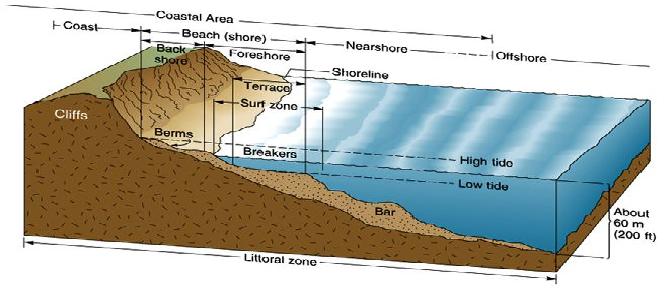
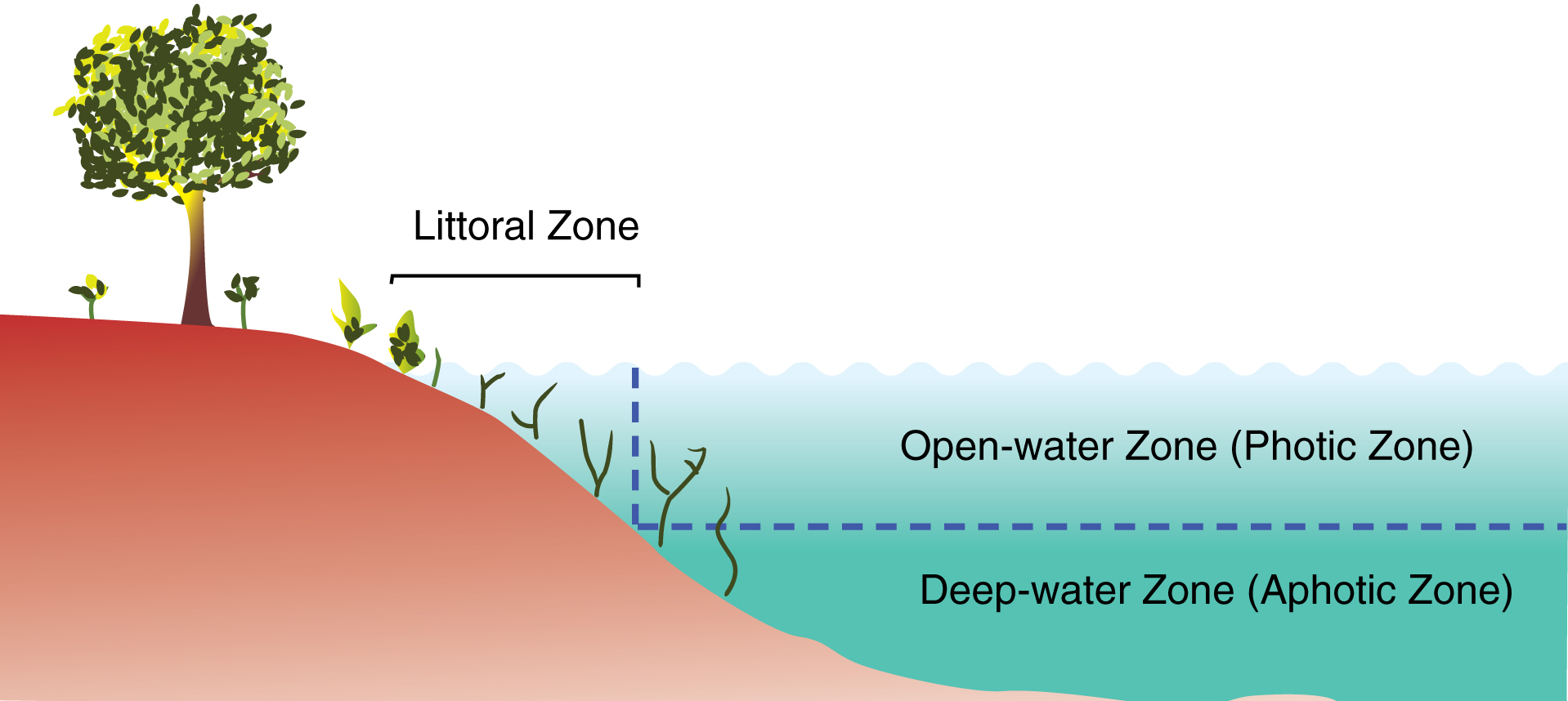
The littoral zone is the zone surrounding the lake, from the high water mark to the area that is permanently underwater but still has enough sunlight for plants. The aquatic vegetation in the littoral zone is highly productive, and the researchers suggest that it should be considered and accounted for as a carbon sink. Considering that the shorelines of the oceans are accounted for, and globally shorelines of lakes are four times longer than shorelines of oceans, the researchers argue that quantifying the carbon used by plants in the freshwater littoral zones potentially changes the net carbon use in lakes from source to sink, meaning lakes absorb more carbon than they emit.
What is the littoral zone?
First, what is a littoral zone? It is defined differently by different entities. The Uppsala researchers define it as the zone between high water and the point where photosynthesis can no longer occur in any body of water. That is logical. Interestingly, using that definition, littoral zones of salt water are the same as littoral zones of fresh water, the only difference being salt. So, why are salty littoral zones part of the carbon sink, but freshwater littoral zones ignored when calculating carbon budget? The researchers have a really good point here.
Vegetation in the littoral zone
Freshwater littoral zones are some of the most productive regions in the world due to the abundant growth of plants, including angiosperms, ferns, mosses, and liverworts. All of this vegetation grows, reproduces, and dies, leaving a huge amount of organic matter in the water. This would indicate that there is a large turnover of carbon, from the plant, to the anoxic mud submerged under the water. In contrast to ocean littoral zones, freshwater littoral zones have little oxygen, because the water is relatively stagnant. Carbon stays there, in essence, buried. Decay takes a long time without oxygen, so there is little gaseous carbon dioxide being produced. The researchers think it is more sink than source of carbon and their paper suggests that this should be accounted for in carbon models.
RELATED: Soil Carbon in a Warming World
Why are plants in the littoral zone different from land plants?
Plants take up large quantities of carbon dioxide for photosynthesis and give off oxygen as a waste product. On land, when plants die, they decay quickly because oxygen is plentiful. Most of the carbon from the dead plants is cycled into the air as carbon dioxide. Plants can use this carbon dioxide in photosynthesis again, so land plants are considered to be a carbon sink, as long as they continue to grow. In the littoral zone, the plants are growing in water, so when they die, they fall into the water and sink (pun intended). Submerged, they do not decay, as there is no oxygen. The researchers think this is a significant carbon sink and should be considered, or at least not added to the carbon source calculations. In fact, compared to land plants that recycle carbon, littoral zone plants not only use carbon dioxide from the atmosphere, but when they die, their carbon rests in the mud instead of entering the air, suggesting that littoral zone plants are a more efficient sink than land plants. The researchers at Uppsala did a lot of calculations and used a lot of accepted computer models, but they added in estimates of carbon stored in anoxic substrates (the mud). They found that the littoral zone is actually a sink, not a source. This finding affects the carbon budget (discussed below).
Blue carbon sinks
For the last 15 years, or probably as long as scientists have been calculating carbon budgets, plants on marine shorelines were considered a sink, and a solution to the problem of carbon sources. It was expected that planting along marine coasts would counter the effects of the oceanic carbon source. That is, it would counter the effects of carbon dioxide entering the atmosphere from the oceans. Yet, until now, no one thought to account for plants on freshwater shores in like manner. Since marine littoral carbon is blue, how about calling freshwater littoral carbon green? Just a thought.
RELATED: Land Carbon Released During Last Deglaciation Period
What is a carbon budget?
A carbon budget is a political term that describes, with the help of a lot of computer models, the amount of carbon emissions that would result, theoretically, in a certain amount of temperature increase. So, basically, a carbon budget is an assessment of carbon sinks and sources, and a complicated analysis of how the result of adding sinks and sources will add or subtract carbon from the atmosphere. Then, these models determine how much of a sink or source will change the global temperature.
The IPPC (Intergovernmental Panel on Climate Change) and other scientists and universities use models to estimate the carbon budget and how changes in sources and sinks will change the temperature of the earth. According to the Uppsala researchers, these scientists do not consider the sink that occurs at the littoral zone of freshwater lakes, and if they did, it would significantly change the calculations. Charlotte Grasset, the lead author of the paper, said that when littoral zones are included in the models, lakes switch from a net carbon source to a net carbon sink: The carbon stored in lake sediments is more than that released to the atmosphere from the lake water. Her research team plans to do more work to clarify the amounts of carbon sequestered in plants and sediments and released to the atmosphere, but there is clearly carbon sequestered that should be added to the models.
Does changing the carbon budget change the amount of carbon?
No. Changing the perceived amount of carbon considered to be a sink or source is not changing the actual amount of carbon in the atmosphere. So, now that we know the models are underestimating the carbon sinks, it is not going to change the actual temperature of the planet. It will, however, change the projected estimated temperatures.
There are a plethora of games online where you can put in numbers to determine how much carbon humans can emit and how that will change the temperature. While it is very true that anthropogenic additions to carbon dioxide in the atmosphere are changing the world as we know it, we cannot guess, even scientifically, how much the temperature will change if we switch to solar energy, or electric cars, or nuclear power. Scientists do their best to think of all potential factors and calculate the results. These researchers found a significant omission in the amount of carbon the environment of lakes is adding to our carbon sinks. Correcting this omission will be a good thing for improving the accuracy of the models in determining how much fossil fuels we can burn to increase or decrease global temperature. Many factors continue to shift within these models: Eruption of a volcano would counteract this increase in sink and add a lot of carbon source. These models of carbon estimates remain incomplete estimates rather than realities.
Is this good news?
You bet this is good news. It is good news for naturalists, outdoors enthusiasts, kayakers, campers, and hikers, as well as climate scientists. If the littoral areas around lakes are increasing the carbon sink and were previously unknown as carbon sinks, it is time for all people to start planting grasses around the littoral zones of lakes. In fact, this paper could be used to support arguments to not build condominiums and shopping centers around lakes. If the researchers are correct, and it seems they are, their findings support increased preservation of wetland ecosystems. We can reduce our carbon footprint by enjoying nature. Great news.
This study was published in the peer-reviewed journal Nature Geoscience.
References
Grasset, C., Mesman, J.P., Tranvik, L.J., Maranger, R., & Sobek, S. (2025). Contribution of lake littoral zones to the continental carbon budget. Nature Geoscience, 18, 747–752. https://doi.org/10.1038/s41561-025-01739-8
Wikipedia. (2025). Littoral zone. https://en.wikipedia.org/wiki/Littoral_zone.

About the Author
Helen Petre is a retired biologist who enjoys littoral zones and other wild places.