







Agricultural pesticides stay in the air long after they are sprayed, latching onto particles in the air instead of breaking down.
By Helen Petre
Global pesticide use has doubled between 1990 and 2022 and is now at four million tons annually. While using agricultural pesticides significantly increases food yield, there are risks to human health.
Pesticides are routinely applied in agriculture, and most are regulated based on residues left on the commodity or the soil. Often pesticides are applied as aerosols, or droplets forced through orifices into the air. The impact of this use is not measured. Some of these pesticides flow through air, but most attach to particulate matter in the air, thus remaining in the air for longer time periods than gas.
The researchers behind a recent presentation at the Goldschmidt Conference, the world’s foremost geochemistry conference, present evidence that agricultural pesticides attached to particles in the air have a much greater environmental impact than gaseous pesticides. Researcher Boulos Samia and colleagues at Aix-Marseille University investigated the half lives of nine pesticides commonly used in viticulture. They found that all nine compounds could be reclassified as persistent organic pollutants.
Environmental impact of agricultural pesticides
Huge quantities of pesticides are used in the production of grapes and products made from grapes. The intention is that pesticides are absorbed by the plant or animal, into the plant or animal tissues, where the pesticide acts as intended to destroy a fungus, insect, or plant. Some agricultural pesticides are powders, or liquids applied to the soil or dripped on the plant. But most are sprayed onto the plant with pressure, creating a fog of very small water droplets by forcing pesticides mixed with water through small orifices. When pesticides are sprayed this way, a significant fraction of the pesticides enter the atmosphere and do not settle on the grapes, or the leaves. Some remain suspended in the air, while other molecules adsorb to particulate matter in the air and persist in the atmosphere, or are transported adsorbed to atmospheric particles.
Airborne pesticides have different half lives than adsorbed pesticides. Their persistence in the atmosphere and potential for long-range transport in the atmosphere have never been tested. European regulations are on the basis of gaseous persistence based on hydroxyl radicals. These rules ignore any pesticide adsorbed to particulate matter, which could be 100 times more persistent, or take 100 times longer to break down. Even so, the particles the pesticide is adsorbed to can influence the breakdown products and metabolic rate of breakdown. If we do not consider pesticide adsorbed to particulates in the atmosphere, we are ignoring a large portion of pesticides and other breakdown products that remain in the atmosphere and can be transported to non-agricultural areas.
Viticulture
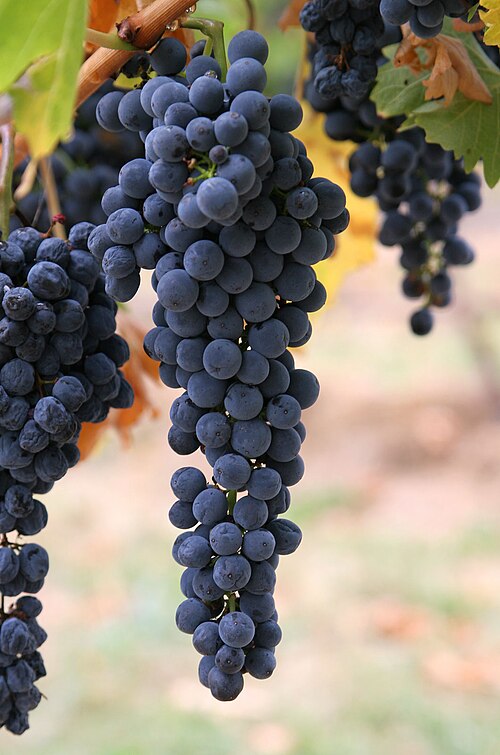
Viticulture is the growing of grapes for fresh fruit, raisins, or wine production. Grapes have been grown for 8,000 years and are grown on every continent except Antarctica. It seems like after all that time, grapes would have evolved to not require pesticides to grow well, but that is not the case. Grapes are very susceptible to fungal diseases because they require lots of water to grow well.
Many common pesticides, including fungicides, insecticides, and herbicides, are currently necessary for optimal grape growth. The researchers tested the persistence of these pesticides in the air, and adsorbed to particulate matter in the atmosphere.
Agricultural pesticides used in viticulture
For their presentation, the researchers studied common pesticides used in viticulture, the breakdown products of those pesticides, and the effects of temperature and humidity on the pesticides and their breakdown products.
To do this, they made a mixture of nine common pesticides used in viticulture. This included the fungicides boscalid, cyprodinil, spiroxamine, tebuconazole, trifloxystrobin, and flopet. Also included were cypermethrin and deltamethrin (neurotoxic pyrethroids used to control mosquitos), and pendimethalin (a selective herbicide that controls annual grasses and broadleaf weeds).
Fungicides
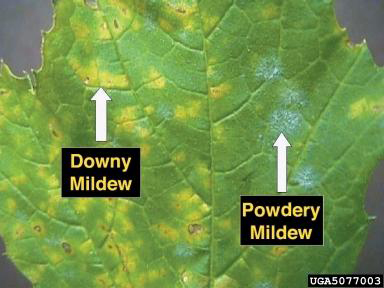
In viticulture, fungicides are used to control powdery and downy mildews, two of the most severe diseases of grapes. These produce severe losses in yield, or even death of the vines. Powdery mildew appears as white, powdery spots, while downy mildew appears as yellow stains on the leaves. Powdery mildew affects all green parts of the plant, usually occurs in cooler temperatures, and is terminal if untreated. Downy mildew occurs in hotter temperatures and high humidity.
Both diseases result in infections in spring, but the spores overwinter, then germinate whenever the environmental conditions are wet, requiring year-round control. The average number of treatments per year is 13, and treatments should be with different chemicals to prevent resistance.
Pyrethroids
Why are pyrethroids used in viticulture? Vineyards are often wet and are breeding grounds for mosquitos. Workers in the vineyard should be protected from mosquitos, as anyone working or playing outdoors knows the effects of large quantities of mosquitos. In areas where malaria is a risk, this is prophylactic. Pyrethroids also control flies, bugs, and beetles.
Read more about combating pests in vineyards: Invasive Species of Spotted Lanternfly Sniffed Out by Dogs
Natural pyrethroids are components of chrysanthemums and they break down in sunlight. In order to use pyrethroids more efficiently as pesticides, synthetic pyrethroids made in labs are altered to be photostable, which means they remain intact and are not broken down by sunlight. Pyrethroids are neurotoxins. Neurotoxins are poisonous to any animal, including humans, therefore protections are necessary when using them. Neurotoxins attack the nervous system of any animal on contact. There are no antidotes. In cases of accidental human poisoning, pyrethroids are metabolized and removed from the body, but they pass into breast milk. While pyrethroids are much more toxic to insects than to humans, mainly because insects are a lot smaller than humans, occupational poisoning does occur.
Many insects, including malarial mosquitos and bedbugs, are often resistant to pyrethroids. Still, pyrethroids are often used to impregnate mosquito nets in malarial infested areas. Due to widespread use, resistance is worldwide, for both malarial mosquitos and bedbugs. In order to prevent resistance, synthetic pyrethroids have been altered. While this chemical change makes them harder for insects to resist, it also makes them more toxic to humans. Even new formulations are considered to have low toxicity to humans; however, the results of this study indicate that aerial spraying of pyrethroids, such as is done in mosquito spraying as well as orchard spraying, may have more severe effects if we consider the adsorbed particulate pesticides with high persistence.
Herbicides
Herbicides are routinely used to reduce weeds, including crabgrass, which make work in the vineyard easier and prevent wet conditions conducive to mildew infections and mosquitos. Herbicides are effective at controlling weeds, but there is a significant health risk, especially an increase in cancer.
Although common sense would dictate that herbicides are safer for humans than insecticides, or even fungicides, that is not the case. The EPA requires a 24-hour period between spraying pendimethalin and reentry into the orchard, which means that workers are routinely exposed to a harmful substance given that it sticks in the air for longer. The researchers of this study found that persistence is longer than expected, which could mean that the time for reentry should be extended for the safety of farmworkers.
Pesticide regulations
The researchers adsorbed the nine pesticides to atmospheric particles, like dust, or organic material normally suspended in the air. They exposed these to ozone and hydroxyl radicals, which are normally present in the atmosphere. The European regulations established at the Stockholm Convention require that any airborne pesticide have a half life of less than two days. That means that if 10 mg are present at application, in two days, only 5 mg can be present.
RELATED: Bee Behavior Affected by Pesticides and Temperature
Results of the pesticide study
None of the pesticides met this two-day half life regulation. Instead, half lives ranged from three days (cyprodinil) to over a month (folpet). The researchers suggest changing the classification from pesticides to persistent organic pollutants, because the pesticides actually stay in the air longer than allowed.
The team also studied the breakdown products of these pesticides. They found several toxic and non-commercially available products. These could be regulated as well, as they could have unknown toxic effects.
The team studied the pesticide molecules at different temperatures and relative humidities because pesticides act differently in different climates, or even different weather conditions. The results were significantly different at the different temperatures and humidity levels, indicating a need for further study to understand how common pesticides react in different environmental conditions. It is apparent that the researchers found an unrealized impact of common pesticides and that regulations are necessary to address the differences.
Conclusion
This is an important study that provides new information on how common pesticides persist and break down in different environmental conditions. Prior knowledge suggested that these nine chemicals broke down to nontoxic products within two days, but that is not the case. While the pesticides and their breakdown products are within regulatory limits as a gas, and on the fruit, or fruit products, the pesticides and their breakdown products are not within tolerable limits adsorbed to particulate matter in the orchard. This means that agricultural workers are often exposed to toxic residues or unknown products while working. It is difficult to conclude the impact of this finding, but it certainly requires further study. Grape growing is a pesticide-intensive agriculture and these compounds are required for acceptable yield, therefore more study is necessary to assure there are no unnecessary human health risks.
This study was presented at the Goldschmidt Conference.
References
Samia, B. (2025, July 11). Heterogeneous atmospheric reactivity of viticultural pesticides: Implications for long-range transport and regulatory assessments. Goldschmidt. https://conf.goldschmidt.info/goldschmidt/2025/meetingapp.cgi/Paper/27631.
United States Environmental Protection Agency. 2025. Pesticides. https://www.epa.gov/pesticides.
Wikipedia. 2025. Viticulture. https://en.wikipedia.org/wiki/Viticulture.

About the Author
Helen Petre is a retired biologist and college biology instructor. Her interests include science and her grandchildren.