How Do Plants Harness Nitrogen-Fixing Bacteria?
Nitrogen-fixing bacteria help plants obtain a usable form of nitrogen. But what’s the science behind it, and how can it benefit crops?
Making Science Make Sense

Nitrogen-fixing bacteria help plants obtain a usable form of nitrogen. But what’s the science behind it, and how can it benefit crops?
Brain fog accompanying long COVID could be the result of breaches in a cellular barrier protecting the brain.
Flying insects seem magnetized by light, but why? New research uncovers the dorsal-light-response mechanism behind this phenomenon.
Researchers further chemotherapy efficacy by identifying antibodies that attack a specific protein in tumor cells.
Neuroscientists studying childbirth found different effects on brain cortex volume for those recovering from a natural delivery or C-section.
Emerging research on a 3D protein structure within red blood cells tells us how this and similarly shaped proteins work in the body.
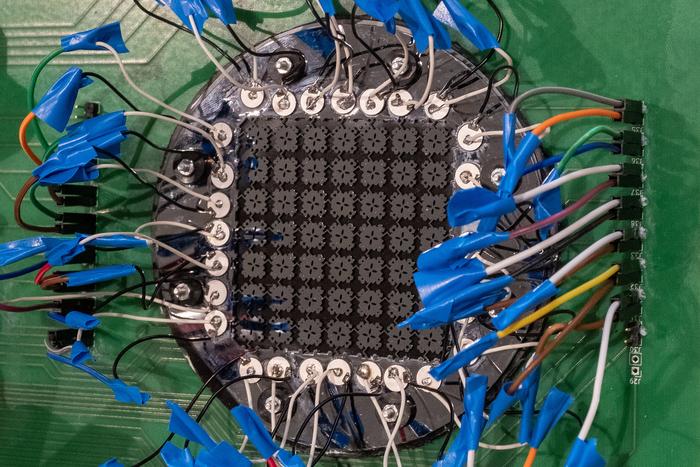
Engineers create a metamaterial that senses spoken words without the need for a battery. So far it can classify which of two words in a pair was spoken.
Depression and anxiety can act as moderators that affect the relationship between gaming time and gaming disorder.
Cell-derived coffee gets its start in a lab instead of a field, and soon its flavor profile will be comparable enough to meet the rising coffee demand.
Rainforest conservation gains new focus with the discovery that just 2% of the diverse tree species in the forest account for half the trees.