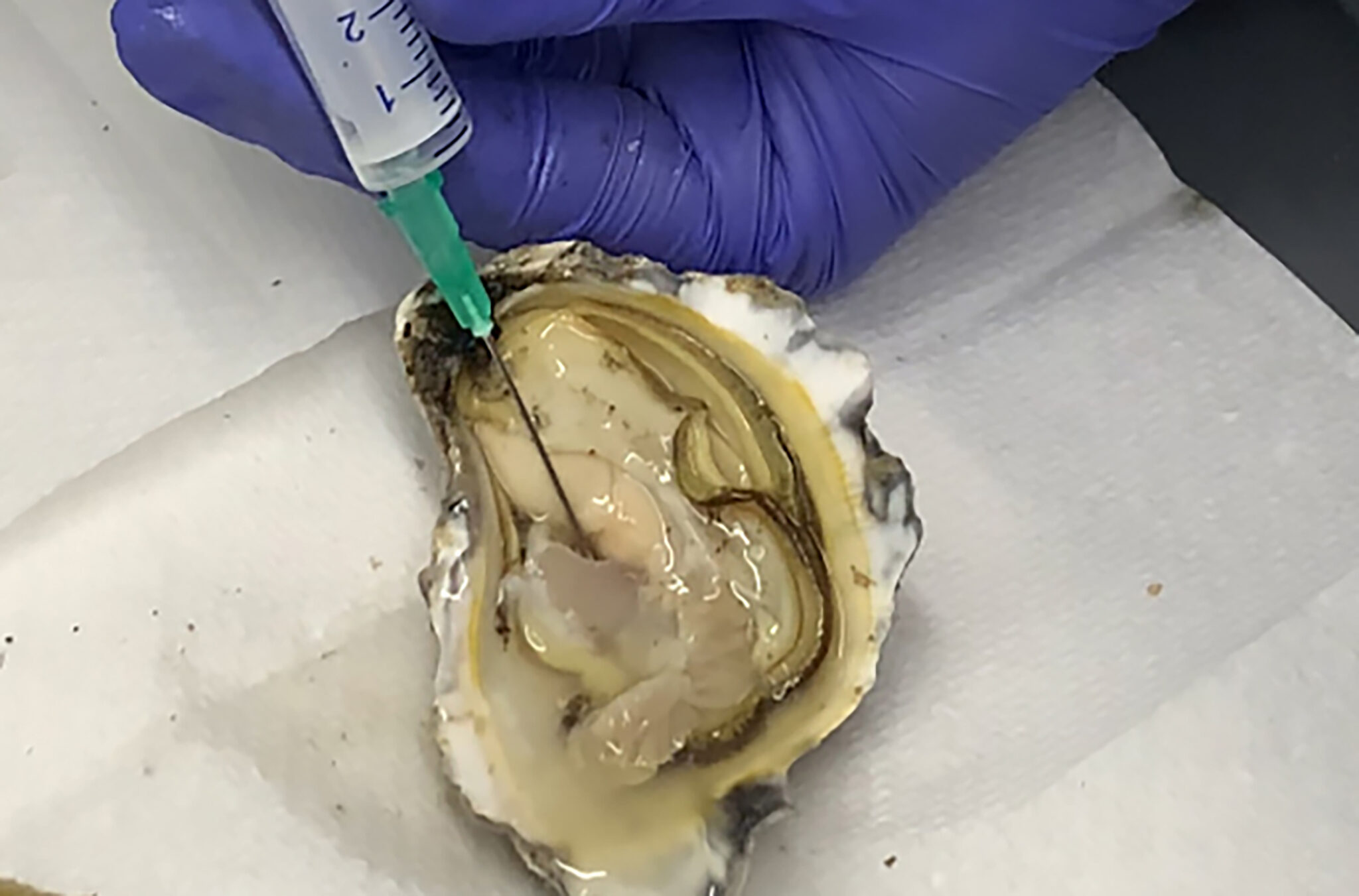








Enhanced immune responses to the flu could be possible with an intranasal influenza vaccine that prolongs immune memory of a special cell.
By Rachel Tat
With flu season quickly approaching, it’s time to start thinking about getting our flu shots. Influenza virus continues to be a major cause of illness, and the World Health Organization estimates 3–5 million severe cases annually around the world. Vaccination remains the most effective way to prevent infection and spread of the virus.
However, flu shots do not guarantee that someone won’t catch the flu, especially those in high-risk populations such as children under 5, older adults, pregnant people, those who are immunocompromised, and those with chronic conditions. Thus, work is being done on finding ways to improve the influenza vaccine.
Researchers out of the University of Rochester in New York studied a previously overlooked population of immune cells that enhances the longevity of the immune response against influenza, and a molecule that improves this immune response. Their findings reveal a potential novel strategy to boost the success of flu vaccination.
Where we are right now with flu vaccines
Upon initial infection or vaccination, the body produces immune cells called memory T cells that act as the first line of defense should there be a second infection. Memory T cells reside in mucosal tissue, which is tissue that lines the inside of body cavities and organs, acting as a protective barrier. Mucosal tissue is where viruses first encounter the body and the immune system, so memory T cells are positioned to quickly activate upon reinfection to limit viral replication and disease. Current vaccination strategies can be improved by focusing on immune memory.
Although flu shots administered by injections result in a strong antibody response against influenza, they do not result in a strong T cell response. Flu vaccinations given by nasal spray are more effective in eliciting a memory T cell population, but there are still limitations. Therefore, much research is being done to figure out ways to enhance flu vaccines and to understand how immune memory develops.
The research team sought to uncover the mechanisms that support the generation and persistence of memory T cells. Understanding the biology behind memory T cell development may give us clues and directions for developing more effective influenza vaccine approaches.
A new role for monocytes
The key findings of this research focused on a specific type of cell called monocytes. These cells are a type of white blood cell that circulate the bloodstream to respond quickly to infection. Scientists have previously considered them to be short-lived. However, the research team used a mouse model and discovered a subset of monocytes that differentiate into memory-stage cells that persisted in the lungs for more than 4 months after influenza infection as well as retain memory of past influenza exposure. We will call these memory-stage monocytes.
Not only do memory-stage monocytes last longer in the body, they also interact with a specific type of memory T cell: tissue-resident memory T cells, or TRM cells. TRM cells reside in a particular tissue rather than continuously circulating through the bloodstream. They respond quickly at specific sites of infection. The results of this study provide evidence that the memory-stage monocytes supported the formation and activation of these TRM cells during influenza infection.
Monocytes and a protein
Finally, the researchers found that the memory-stage monocytes produce a protein called galectin-1. This protein is important because it interacts with TRM cells and promotes TRM cell persistence, generation, and responses. They assessed galectin-1 on its ability to enhance an influenza vaccine that is currently on the market, FluMist (a nasal spray vaccine).
The researchers tested whether additional intranasal administration of galectin-1 following vaccination of mice had an effect on memory T cells. They found that there was an increase in the number of TRM cells in the mice that were administered both FluMist and galectin-1 compared to the mice that only received FluMist. The mice supplemented with galectin-1 also survived influenza infection better than both unvaccinated mice and mice vaccinated with just FluMist.
These findings show clear roles that memory-stage monocytes and galectin-1 play in enhancing the immune response against influenza.
RELATED: Humidity and Respiratory Virus Transmission
What does this mean for the future of flu vaccines?
This groundbreaking research revealed a new role for monocytes that scientists had not considered before. Not only do some monocytes persist longer than expected, but they also interact with memory T cells and produce an important protein that overall enhances the immune protection against influenza.
Importantly, the role of galectin-1 provides a potential avenue for enhancing nasal vaccine strategies. Galectin-1 may be used as an adjuvant—a substance added to a vaccine to enhance the subsequent immune response—in order to bolster long-lasting immune memory.
More work needs to be done to validate its use in human medicine, but this research provides a promising starting point for improving our current vaccine strategies.
This study was published in the peer-reviewed journal Nature Immunology.
The information contained in this article is for educational and informational purposes only and is not intended as health or medical advice. Always consult a physician or other qualified health provider regarding any questions you may have about a medical condition or health objectives.
References
Lim, K., Dahal, A., Lv, X., … & Kim, M. (2026). Monocyte-derived galectin-1hi cells provide innate immune help in the generation of functional memory CD8+ T cells. Nature Immunology. https://doi.org/10.1038/s41590-026-02638-9
Neumann, G., Cowling, B. J., Chen, H., … & Kawaoka, Y. (2026). Influenza. Nature Reviews Disease Primers, 12, 51. https://doi.org/10.1038/s41572-026-00727-5
World Health Organization. (2025, February 28). Influenza (seasonal). https://www.who.int/news-room/fact-sheets/detail/influenza-(seasonal)

About the Author
Rachel Tat is a PhD Candidate at Indiana University School of Medicine in the Department of Microbiology and Immunology. She is passionate about microbes and infectious diseases, along with science communication, outreach, and teaching. Outside of science, Rachel enjoys playing the violin, long-distance running, and gardening. Connect with her on LinkedIn.